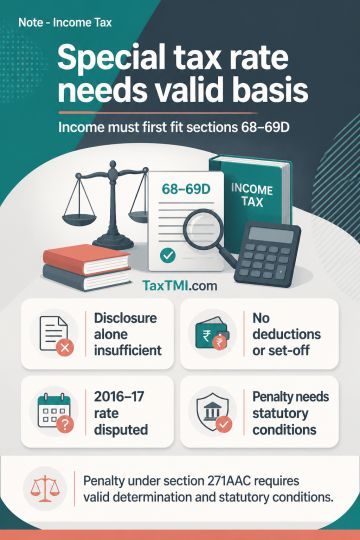
Section 115BBE classification requires a valid deeming-provision basis before special taxation, while the enhanced rate's temporal application remains...
Coercive recovery during GST searches is restrained pending scrutiny, preserving normal business operations and requiring adherence to investigation g...
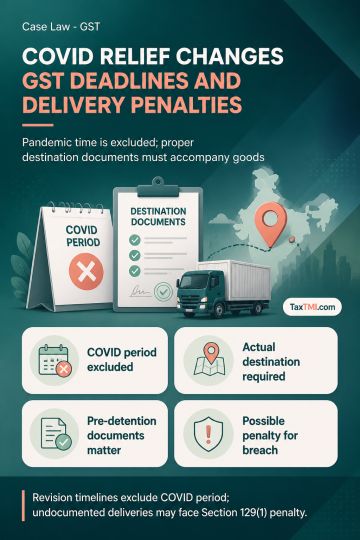
COVID-19 limitation exclusion and destination-specific e-way bills govern revisional timelines and penalties for undocumented third-party plywood deli...
Page of 4888
Press 'Enter' after typing page number.
601 to 620 of 97755 Results
❮
❯
❯❯
0 / 200
Expand Note
Add to Folder
No Folders have been created
+
Are you sure you want to delete "My most important" ?
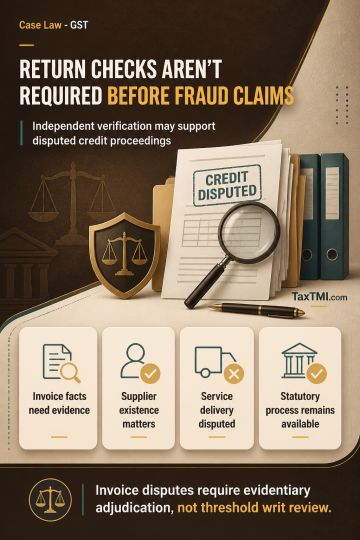
Section 61 return scrutiny is a pre-adjudicatory verification mechanism and is not a mandatory prerequisite for tax-determination proceedings under Section 74A. Rule 99 applies only where return scrutiny has actually commenced. Independent verification alleging that works-contract sub-contractors were fictitious or non-existent may provide the factual foundation for fraud-based input tax credit proceedings. Disputes over the actual existence of suppliers, provision of services, and genuineness of invoices require evidentiary adjudication rather than threshold writ review. A show-cause notice should not ordinarily be challenged in writ jurisdiction where statutory adjudication remains available and no jurisdictional defect or recognised exception is established.
Section 61 return scrutiny is a pre-adjudicatory verification mechanism and is not a mandatory prerequisite for tax-determination proceedings under Section 74A. Rule 99 applies only where return scrutiny has actually commenced. Independent verification alleging that works-contract sub-contractors were fictitious or non-existent may provide the factual foundation for fraud-based input tax credit proceedings. Disputes over the actual existence of suppliers, provision of services, and genuineness of invoices require evidentiary adjudication rather than threshold writ review. A show-cause notice should not ordinarily be challenged in writ jurisdiction where statutory adjudication remains available and no jurisdictional defect or recognised exception is established.
Note: It is a system-generated summary and is for quick reference only.
 TaxTMI
  TaxTMI
 of 4888