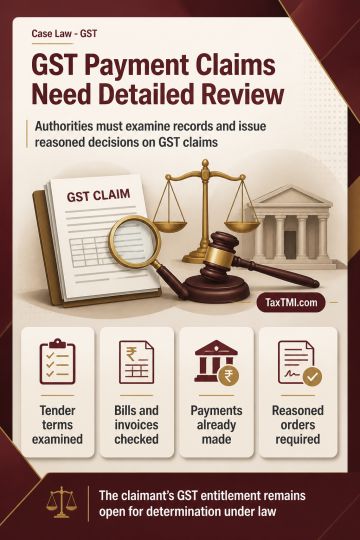
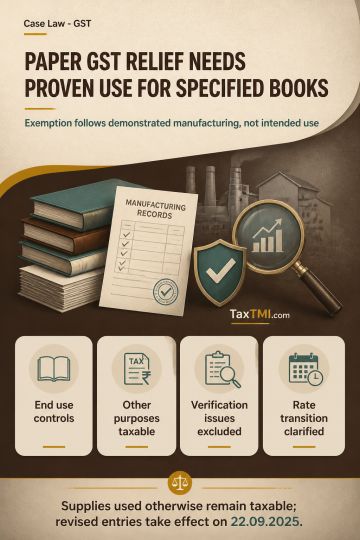
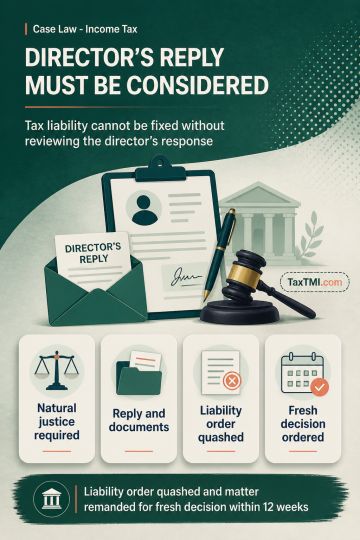
GST payment representations require record-based, reasoned decisions while substantive entitlement remains open for determination by competent authori...
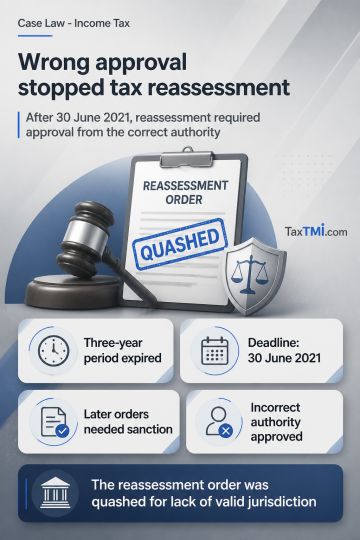
Reassessment sanction under extended limitation required approval from the competent specified authority, invalidating proceedings approved by an inco...
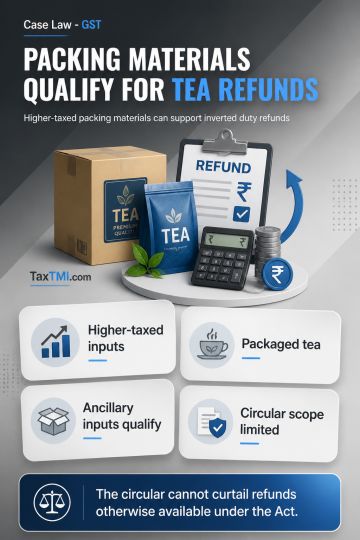
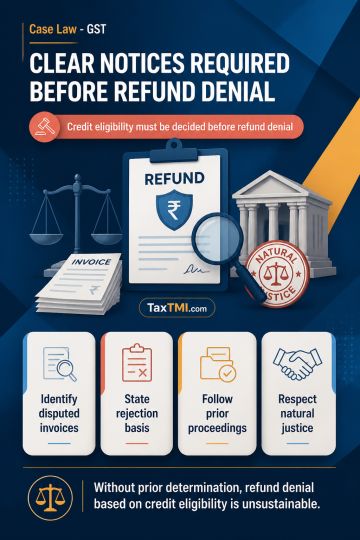
Vague show-cause notices alleging ineligible input tax credit without identifying invoices, the nature of ineligibility, or the basis for rejection cannot support denial of an inverted-duty refund. Invoice details supplied by the taxpayer do not cure that defect, and an appellate authority cannot introduce a distinct ground not stated in the notice, as doing so breaches natural justice. Eligibility of unutilised input tax credit must be determined through proceedings for wrongful availment or utilisation before the credit can be disallowed. Refund proceedings cannot be used collaterally to decide credit eligibility; absent a prior determination, refund denial on that basis is unsustainable.
Vague show-cause notices alleging ineligible input tax credit without identifying invoices, the nature of ineligibility, or the basis for rejection cannot support denial of an inverted-duty refund. Invoice details supplied by the taxpayer do not cure that defect, and an appellate authority cannot introduce a distinct ground not stated in the notice, as doing so breaches natural justice. Eligibility of unutilised input tax credit must be determined through proceedings for wrongful availment or utilisation before the credit can be disallowed. Refund proceedings cannot be used collaterally to decide credit eligibility; absent a prior determination, refund denial on that basis is unsustainable.
Note: It is a system-generated summary and is for quick reference only.
 TaxTMI
  TaxTMI
 of 4884