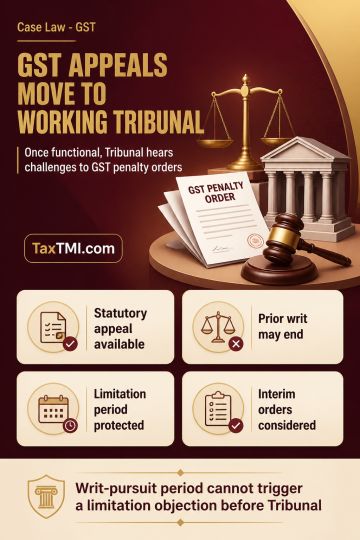
Alternate statutory remedy governs GST assessment challenge, with statutory appeal preserved and limitation objection barred for the permitted filing ...
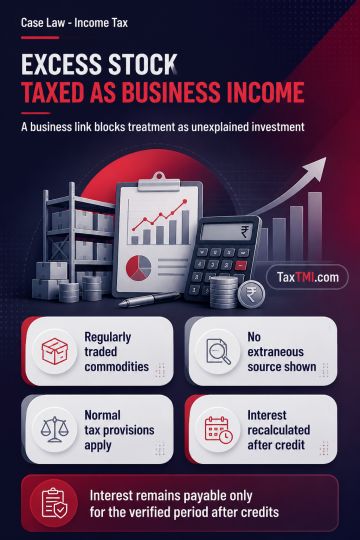
Excess business stock comprising regularly traded commodities, found at business premises and explained as arising from suppressed business profits, retains the character of undisclosed business income where no material establishes an extraneous source. Mere non-recording of purchases does not justify treating the stock as unexplained investment. The higher tax rate for deemed income applies only after valid invocation of the relevant deeming provision; consequently, the excess stock is taxable under normal provisions. Interest for delayed return filing remains mandatory but must be computed from the statutory due date, actual filing date and verified period of default, after credit for interest already charged or paid.
Excess business stock comprising regularly traded commodities, found at business premises and explained as arising from suppressed business profits, retains the character of undisclosed business income where no material establishes an extraneous source. Mere non-recording of purchases does not justify treating the stock as unexplained investment. The higher tax rate for deemed income applies only after valid invocation of the relevant deeming provision; consequently, the excess stock is taxable under normal provisions. Interest for delayed return filing remains mandatory but must be computed from the statutory due date, actual filing date and verified period of default, after credit for interest already charged or paid.
Note: It is a system-generated summary and is for quick reference only.
 TaxTMI
  TaxTMI
 of 4884