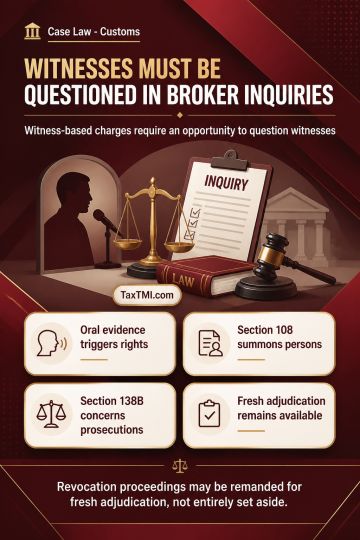
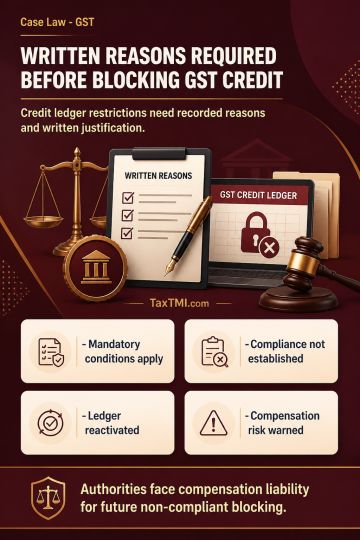
Cross-examination rights in Customs Broker revocation inquiries require witness examination; procedural denial may be cured through fresh adjudication...
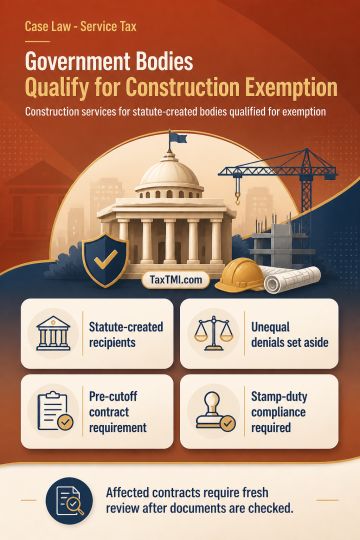
Governmental authority status supports construction-service exemption, while pre-cutoff contract and stamp-duty compliance requires verification on re...
Automated Free Sale and Commerce Certificates enable paperless processing while retaining risk-based manual verification for selected exporter applica...
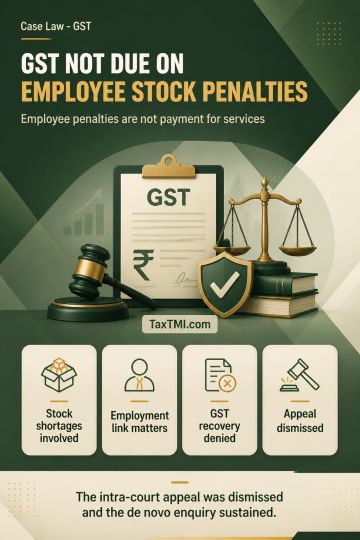
Employee stock-shortage penalties do not constitute consideration for services, preventing GST collection under Schedule II in employment relationship...
Page of 4894
Press 'Enter' after typing page number.
1441 to 1460 of 97862 Results
❮
❯
❯❯
0 / 200
Expand Note
Add to Folder
No Folders have been created
+
Are you sure you want to delete "My most important" ?
Section 47-A of the Indian Stamp Act authorises a reference...
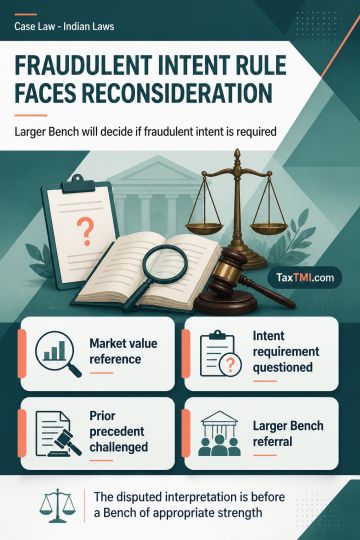
Section 47-A undervaluation threshold: fraudulent intent requirement faces reconsideration after referral to a larger Bench for authoritative resolution.
Contents
Summary
Note
Bookmark
Share
✓ Copied successfully !
Print
Print Options
For full text, please login
Login to TaxTMI
Verification Pending
The Email Id has not been verified. Click on the link we have sent on
Section 47-A of the Indian Stamp Act authorises a reference where the registering authority has reason to believe that an instrument does not truly state market value or consideration. Its text does not expressly require proof of wilful undervaluation or fraudulent intent to evade stamp duty. Earlier larger-Bench precedent had treated such culpable intent as necessary, but that interpretation has been questioned as inconsistent with the statutory language. Judicial discipline prevents a smaller Bench from reconsidering a larger-Bench view; accordingly, the proper jurisdictional threshold under Section 47-A and the correctness of the prior interpretation stand referred to a Bench of appropriate strength.
Section 47-A of the Indian Stamp Act authorises a reference where the registering authority has reason to believe that an instrument does not truly state market value or consideration. Its text does not expressly require proof of wilful undervaluation or fraudulent intent to evade stamp duty. Earlier larger-Bench precedent had treated such culpable intent as necessary, but that interpretation has been questioned as inconsistent with the statutory language. Judicial discipline prevents a smaller Bench from reconsidering a larger-Bench view; accordingly, the proper jurisdictional threshold under Section 47-A and the correctness of the prior interpretation stand referred to a Bench of appropriate strength.
Note: It is a system-generated summary and is for quick reference only.
 TaxTMI
  TaxTMI
 of 4894