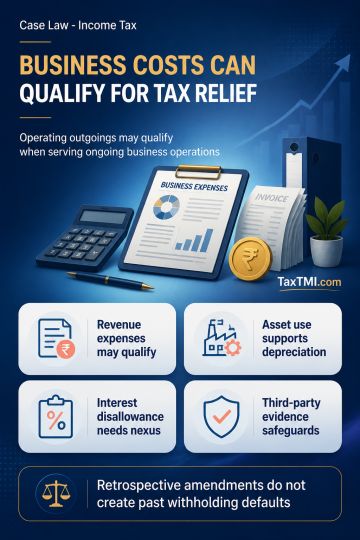
Business expenditure and depreciation rules allow operational outgoings while limiting disallowances for personal elements and unsupported third-party...
Compromise-and-arrangement extensions may accommodate debt assignment where creditor commercial judgment supports value maximisation and avoids proced...
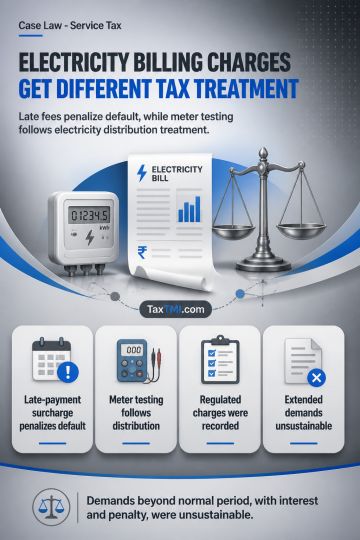
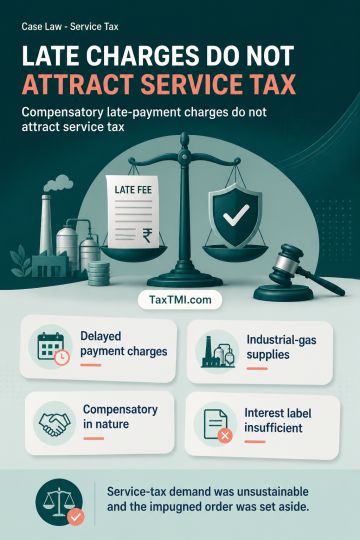
Delayed-payment surcharge is not taxable tolerance consideration where it penalises default, while meter testing follows electricity distribution trea...
Sufficient cause for delayed revenue income-tax appeals requires bona fides, due diligence and a credible explanation; otherwise limitation bars appea...
ITAT treated notional interest on overdue receivables from...
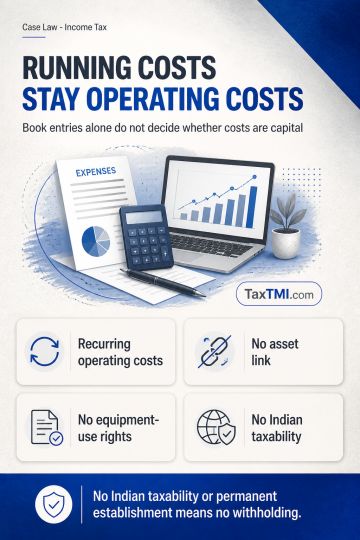
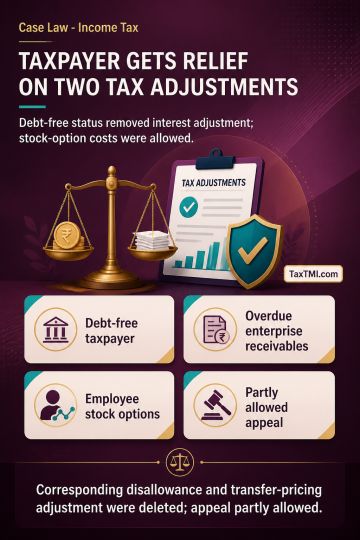
Overdue associated-enterprise receivables: debt-free status defeated notional-interest adjustment, while employee stock-option costs qualified as business expenditure.
Contents
Summary
Note
Bookmark
Share
✓ Copied successfully !
Print
Print Options
For full text, please login
Login to TaxTMI
Verification Pending
The Email Id has not been verified. Click on the link we have sent on
ITAT treated notional interest on overdue receivables from associated enterprises as unwarranted where the taxpayer was debt-free, resulting in deletion of the transfer-pricing adjustment. It also treated employee stock option plan costs as allowable business expenditure rather than capital expenditure and deleted the corresponding disallowance. The appeal was partly allowed on those grounds.
ITAT treated notional interest on overdue receivables from associated enterprises as unwarranted where the taxpayer was debt-free, resulting in deletion of the transfer-pricing adjustment. It also treated employee stock option plan costs as allowable business expenditure rather than capital expenditure and deleted the corresponding disallowance. The appeal was partly allowed on those grounds.
Note: It is a system-generated summary and is for quick reference only.
 TaxTMI
  TaxTMI
 of 4884