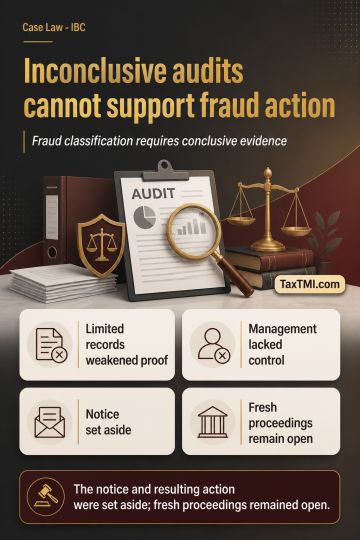
Fraud classification show-cause notices founded on inconclusive forensic audit material cannot sustain action, permitting fresh proceedings on conclus...
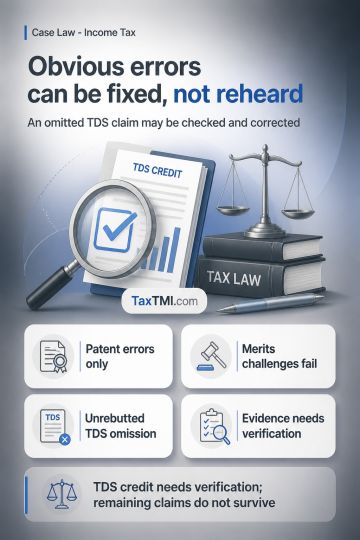
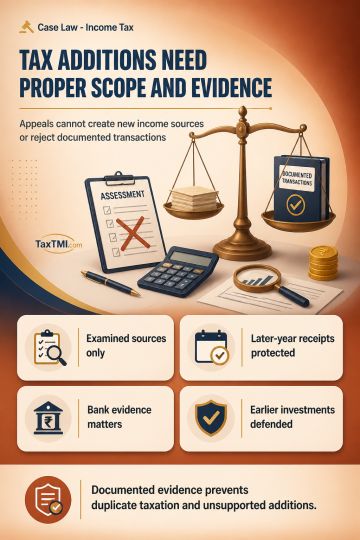
Appellate enhancement limits protect against new income sources, while documented credits and prior-year investments resist unexplained-income additio...
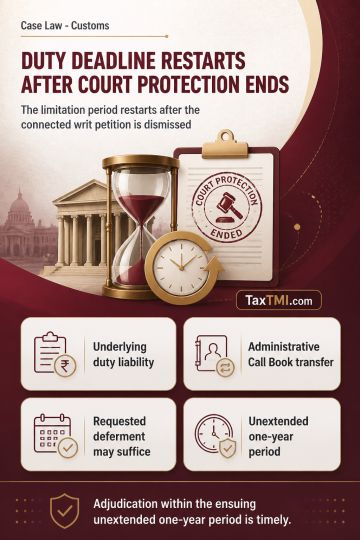
Section 28(9A) of the Customs Act suspends the adjudication limitation period while a specified circumstance prevents determination of duty liability, with the statutory period recommencing when that circumstance ceases. Transfer of a matter to the Call Book is an administrative consequence of such deferment and does not independently create the exclusion period. Where noticees seek deferment because a connected writ petition and interim protection affect the underlying duty liability, those circumstances are directly relevant to non-determination. Noticees' own request for deferment may substantially satisfy the communication requirement. The limitation period consequently runs from dismissal of the connected writ petition, and adjudication within the ensuing unextended one-year period is timely.
Section 28(9A) of the Customs Act suspends the adjudication limitation period while a specified circumstance prevents determination of duty liability, with the statutory period recommencing when that circumstance ceases. Transfer of a matter to the Call Book is an administrative consequence of such deferment and does not independently create the exclusion period. Where noticees seek deferment because a connected writ petition and interim protection affect the underlying duty liability, those circumstances are directly relevant to non-determination. Noticees' own request for deferment may substantially satisfy the communication requirement. The limitation period consequently runs from dismissal of the connected writ petition, and adjudication within the ensuing unextended one-year period is timely.
Note: It is a system-generated summary and is for quick reference only.
 TaxTMI
  TaxTMI
 of 4891