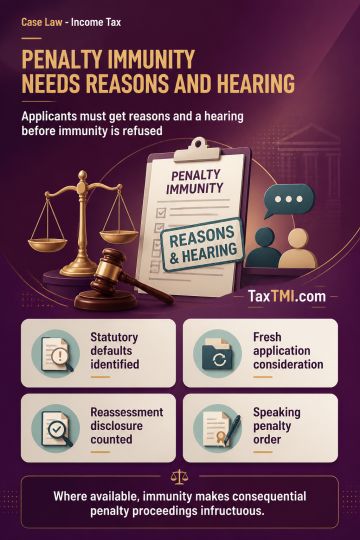
Section 270AA penalty immunity requires identified statutory defaults and a hearing before rejection; reassessment disclosure may constitute under-rep...
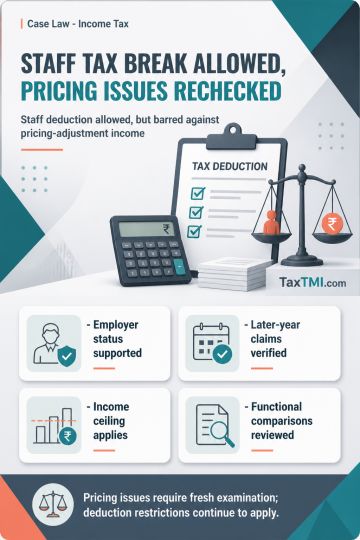
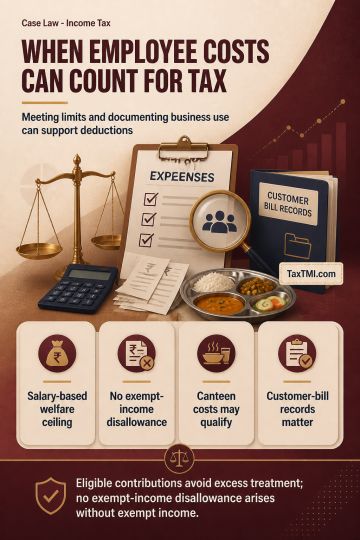
Section 80JJAA employee-cost deduction allowed for deployed staff but barred against transfer-pricing income enhancement, with pricing issues remanded...
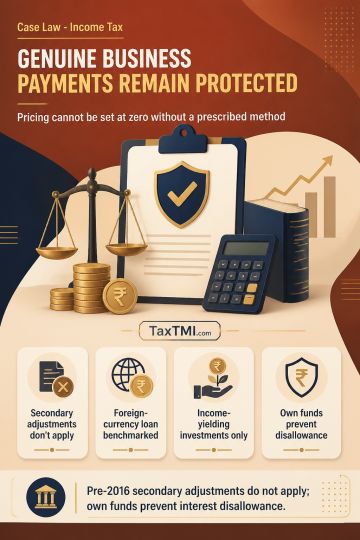
Transfer-pricing methodology protects commercially genuine associated-enterprise payments, while pre-2016 secondary adjustments and related notional i...
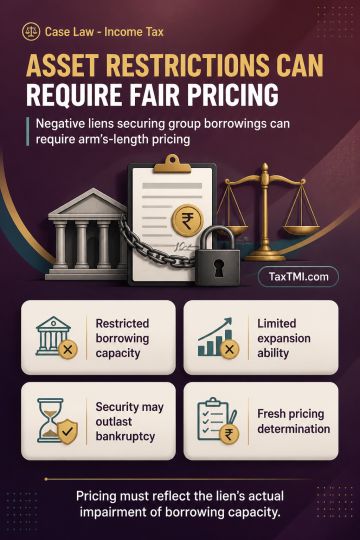
Negative liens over operating assets can constitute international transactions requiring arm's-length pricing reflecting restricted borrowing and expa...
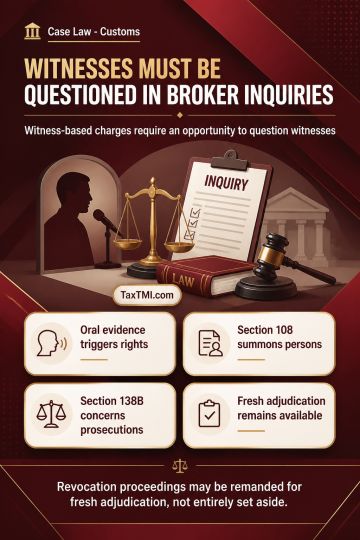
Cross-examination rights in Customs Broker revocation inquiries require witness examination; procedural denial may be cured through fresh adjudication...
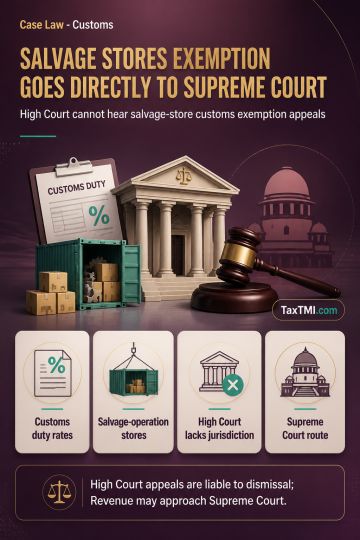
Sections 130 and 130E of the Customs Act exclude High Court appellate jurisdiction over questions relating to the rate of customs duty, including peripheral issues affecting assessment. Entitlement to customs-duty exemption for stores imported for vessel-salvage operations bears on the rate of duty and has wider application; it must therefore be challenged directly before the Supreme Court under Section 130E. Appeals raising that exemption issue are not maintainable before the High Court and are liable to be dismissed for want of jurisdiction, with the Revenue free to approach the Supreme Court.
Sections 130 and 130E of the Customs Act exclude High Court appellate jurisdiction over questions relating to the rate of customs duty, including peripheral issues affecting assessment. Entitlement to customs-duty exemption for stores imported for vessel-salvage operations bears on the rate of duty and has wider application; it must therefore be challenged directly before the Supreme Court under Section 130E. Appeals raising that exemption issue are not maintainable before the High Court and are liable to be dismissed for want of jurisdiction, with the Revenue free to approach the Supreme Court.
Note: It is a system-generated summary and is for quick reference only.
 TaxTMI
  TaxTMI
 of 4886