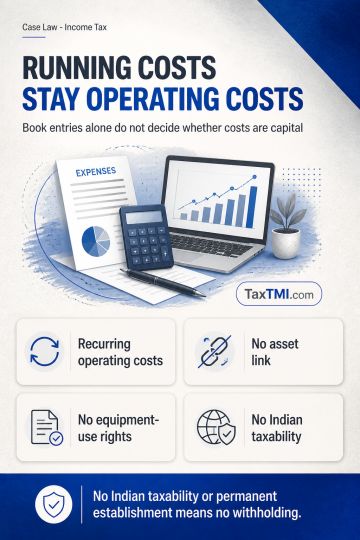
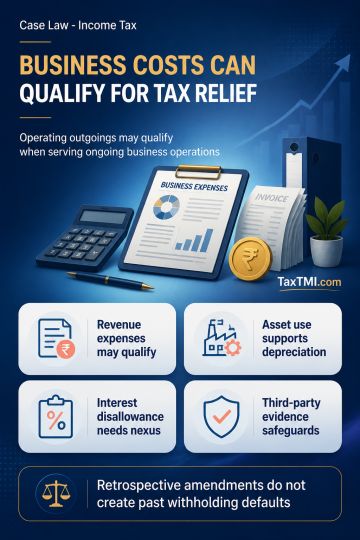
Business expenditure and depreciation rules allow operational outgoings while limiting disallowances for personal elements and unsupported third-party...
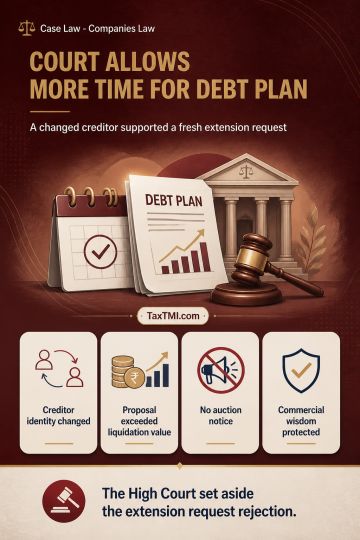
Compromise-and-arrangement extensions may accommodate debt assignment where creditor commercial judgment supports value maximisation and avoids proced...
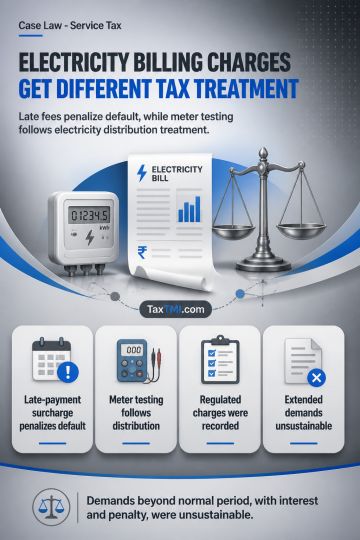
Delayed-payment surcharge is not taxable tolerance consideration where it penalises default, while meter testing follows electricity distribution trea...
Sufficient cause for delayed revenue income-tax appeals requires bona fides, due diligence and a credible explanation; otherwise limitation bars appea...
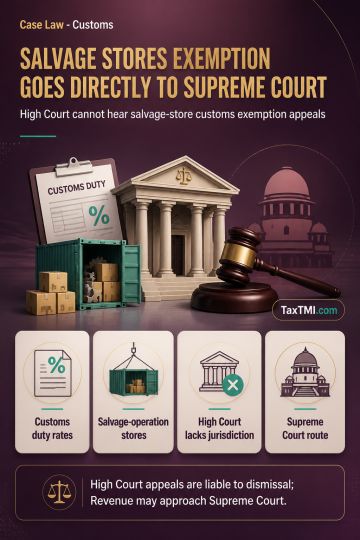
Sections 130 and 130E of the Customs Act exclude High Court appellate jurisdiction over questions relating to the rate of customs duty, including peripheral issues affecting assessment. Entitlement to customs-duty exemption for stores imported for vessel-salvage operations bears on the rate of duty and has wider application; it must therefore be challenged directly before the Supreme Court under Section 130E. Appeals raising that exemption issue are not maintainable before the High Court and are liable to be dismissed for want of jurisdiction, with the Revenue free to approach the Supreme Court.
Sections 130 and 130E of the Customs Act exclude High Court appellate jurisdiction over questions relating to the rate of customs duty, including peripheral issues affecting assessment. Entitlement to customs-duty exemption for stores imported for vessel-salvage operations bears on the rate of duty and has wider application; it must therefore be challenged directly before the Supreme Court under Section 130E. Appeals raising that exemption issue are not maintainable before the High Court and are liable to be dismissed for want of jurisdiction, with the Revenue free to approach the Supreme Court.
Note: It is a system-generated summary and is for quick reference only.
 TaxTMI
  TaxTMI
 of 4884