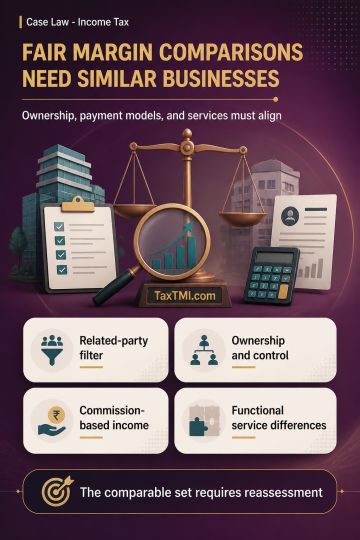
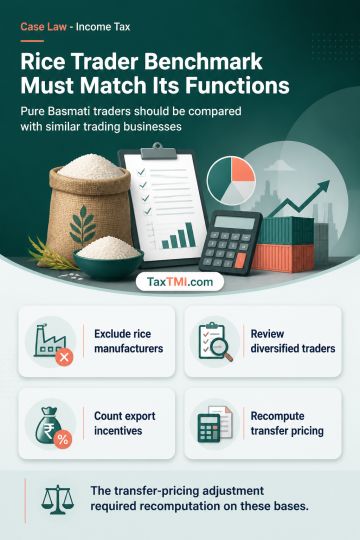
TNMM functional comparability requires excluding rice manufacturers from a pure Basmati rice trader's benchmark and recognising operating export recei...
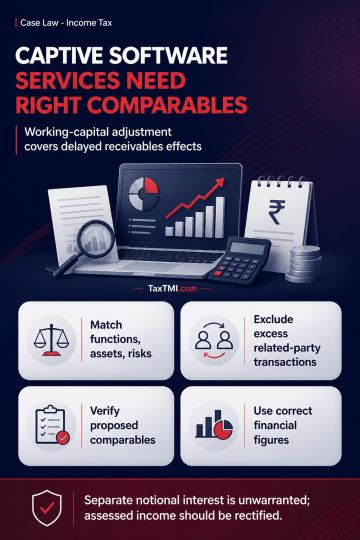
Working-capital adjustment subsumes delayed-receivable effects in TNMM benchmarking of captive software-development services, avoiding separate notion...
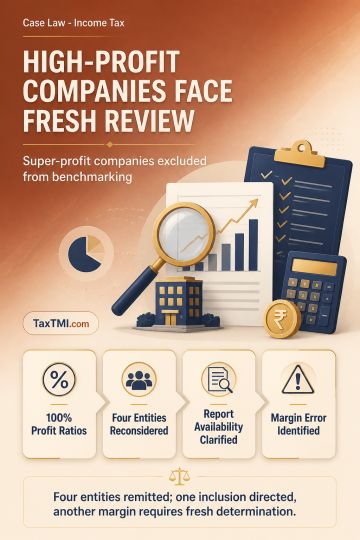
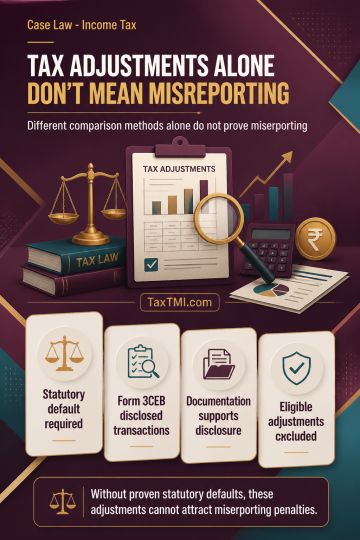
Transfer-pricing comparability requires exclusion of financially illogical super-profit comparables and correction of unsupported annual-report and ma...
Charitable character assessment preserves Section 80G approval despite inclusive spiritual teachings and incidental religious expenditure within the s...
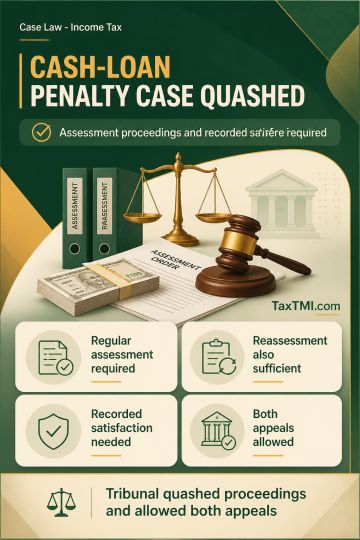
Penalty proceedings for cash-loan acceptance require assessment proceedings and recorded Assessing Officer satisfaction; absent these, the proceedings...
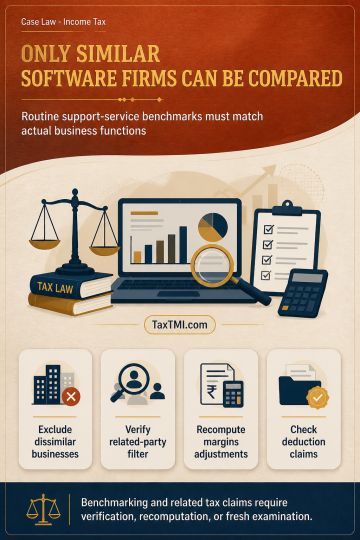
Functional comparability governs software-service benchmarking: dissimilar companies are excluded, while related-party filters, margins and working-ca...
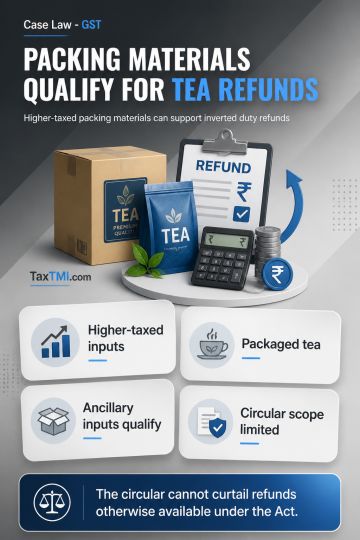
Refund of accumulated input tax credit under the inverted duty structure extends to higher-taxed packing materials used for marketing packaged tea. Section 54(3)(ii) applies where input tax rates exceed the output supply rate, and the plural term "inputs" does not distinguish between principal and ancillary inputs. Packing materials used in the course or furtherance of business therefore qualify as eligible inputs, notwithstanding that bulk tea and packaged tea attract the same GST rate. Circular No. 135/5/2020-GST addresses credit accumulation caused by GST-rate reductions on the same goods over time; it does not cover accumulation arising from higher-taxed packing materials and cannot curtail a refund otherwise available under the Act.
Refund of accumulated input tax credit under the inverted duty structure extends to higher-taxed packing materials used for marketing packaged tea. Section 54(3)(ii) applies where input tax rates exceed the output supply rate, and the plural term "inputs" does not distinguish between principal and ancillary inputs. Packing materials used in the course or furtherance of business therefore qualify as eligible inputs, notwithstanding that bulk tea and packaged tea attract the same GST rate. Circular No. 135/5/2020-GST addresses credit accumulation caused by GST-rate reductions on the same goods over time; it does not cover accumulation arising from higher-taxed packing materials and cannot curtail a refund otherwise available under the Act.
Note: It is a system-generated summary and is for quick reference only.
 TaxTMI
  TaxTMI
 of 4894