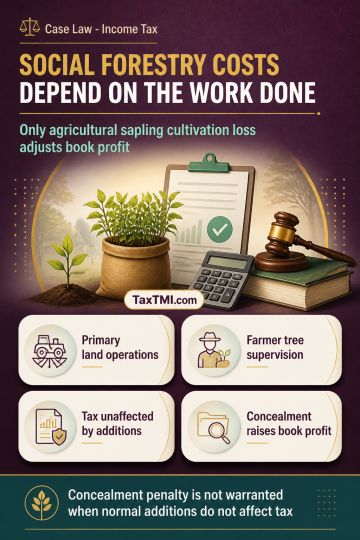
Social forestry expenditure requires activity-based classification, limiting book-profit adjustments and preserving penalty relief where normal additi...
Inaccurate-particulars penalties fail where transfer-pricing documentation shows good faith and due diligence, and underlying capital-gains additions ...
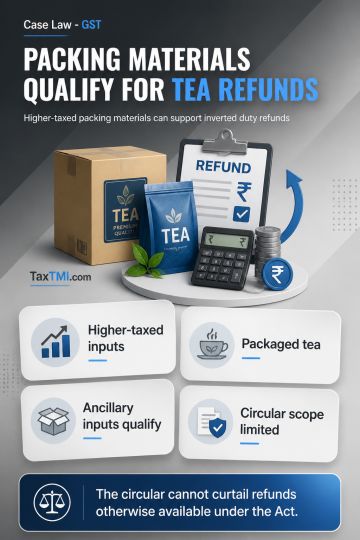
Refund of accumulated input tax credit under the inverted duty structure extends to higher-taxed packing materials used for marketing packaged tea. Section 54(3)(ii) applies where input tax rates exceed the output supply rate, and the plural term "inputs" does not distinguish between principal and ancillary inputs. Packing materials used in the course or furtherance of business therefore qualify as eligible inputs, notwithstanding that bulk tea and packaged tea attract the same GST rate. Circular No. 135/5/2020-GST addresses credit accumulation caused by GST-rate reductions on the same goods over time; it does not cover accumulation arising from higher-taxed packing materials and cannot curtail a refund otherwise available under the Act.
Refund of accumulated input tax credit under the inverted duty structure extends to higher-taxed packing materials used for marketing packaged tea. Section 54(3)(ii) applies where input tax rates exceed the output supply rate, and the plural term "inputs" does not distinguish between principal and ancillary inputs. Packing materials used in the course or furtherance of business therefore qualify as eligible inputs, notwithstanding that bulk tea and packaged tea attract the same GST rate. Circular No. 135/5/2020-GST addresses credit accumulation caused by GST-rate reductions on the same goods over time; it does not cover accumulation arising from higher-taxed packing materials and cannot curtail a refund otherwise available under the Act.
Note: It is a system-generated summary and is for quick reference only.
 TaxTMI
  TaxTMI
 of 4888