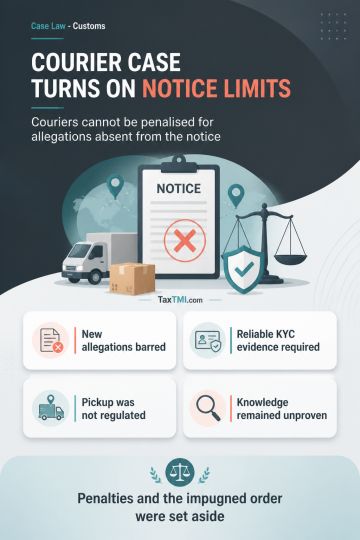
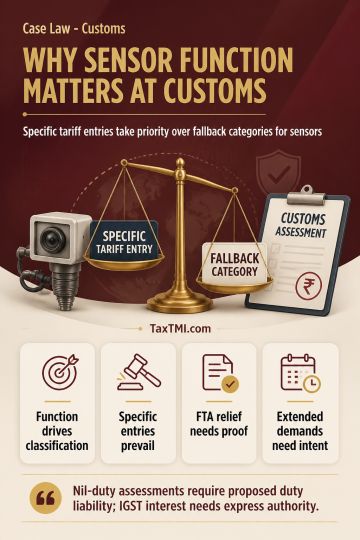
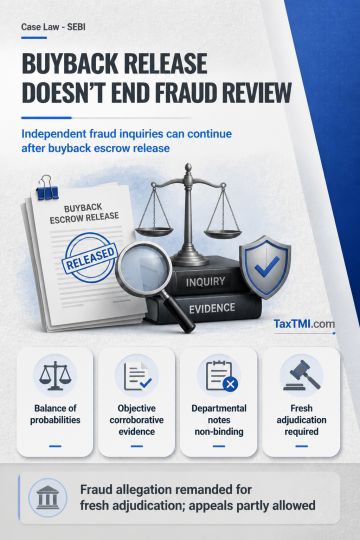
Transfer-pricing benchmarking confines adjustments to associated-enterprise transactions and integrates delayed receivables through TNMM working-capit...
Medical relief status protects government-contracted mobile healthcare from commercial classification, while provisional registration cancellation req...
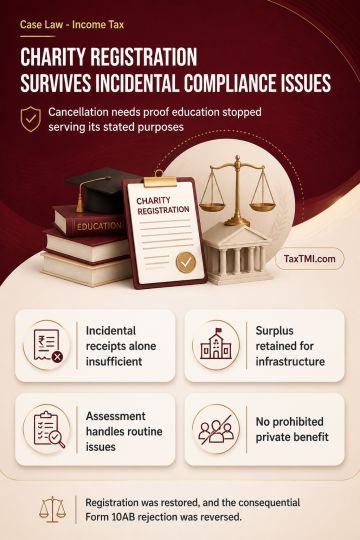
Charitable registration cancellation requires proof that educational activities abandoned their objects; incidental receipts and retained surplus are ...
Prospective customs notification amendments cannot bar provisional release consideration for earlier imports when bills of lading predate their commen...
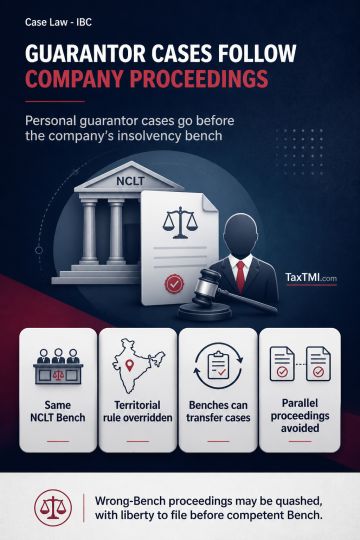
Personal guarantor insolvency jurisdiction follows the corporate debtor's CIRP Bench, enabling inter-territorial transfer and preventing parallel proc...
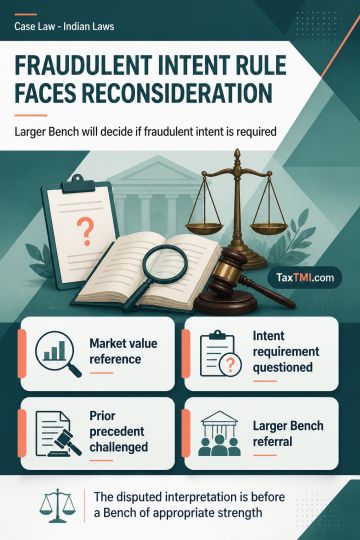
Section 47-A undervaluation threshold: fraudulent intent requirement faces reconsideration after referral to a larger Bench for authoritative resoluti...
RBI supersession powers over multi-State co-operative banks operate independently of the constitutional six-month ceiling and permit statutory extensi...
Page of 4883
Press 'Enter' after typing page number.
941 to 960 of 97649 Results
❮
❯
❯❯
0 / 200
Expand Note
Add to Folder
No Folders have been created
+
Are you sure you want to delete "My most important" ?
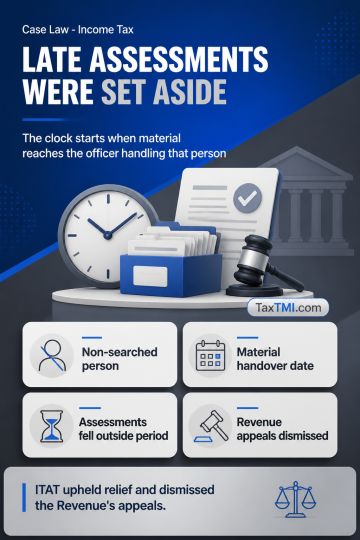
For a non-searched person, the block period for assessment under section 153C is computed from the date seized material is handed over to, or satisfaction is recorded by, the Assessing Officer having jurisdiction over that person, rather than from the search date. Applying that rule, the relevant assessment years fell outside the permissible period, making the assessments time-barred and depriving the Assessing Officer of valid jurisdiction. ITAT upheld the relief granted to the non-searched person and dismissed the Revenue's appeals, following Supreme Court and High Court precedent.
For a non-searched person, the block period for assessment under section 153C is computed from the date seized material is handed over to, or satisfaction is recorded by, the Assessing Officer having jurisdiction over that person, rather than from the search date. Applying that rule, the relevant assessment years fell outside the permissible period, making the assessments time-barred and depriving the Assessing Officer of valid jurisdiction. ITAT upheld the relief granted to the non-searched person and dismissed the Revenue's appeals, following Supreme Court and High Court precedent.
Note: It is a system-generated summary and is for quick reference only.
 TaxTMI
  TaxTMI
 of 4883