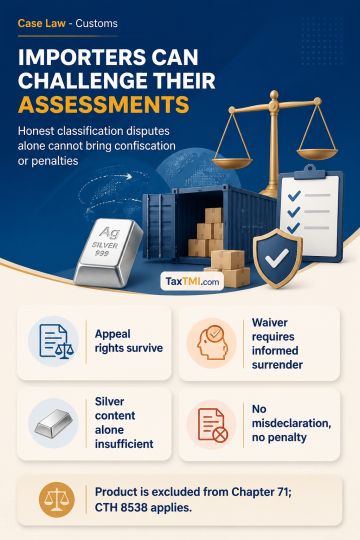
Self-assessed import entries remain appealable, while bona fide classification disputes without misdeclaration cannot justify confiscation or penaltie...
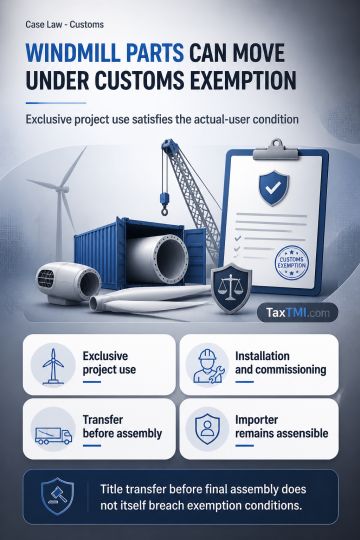
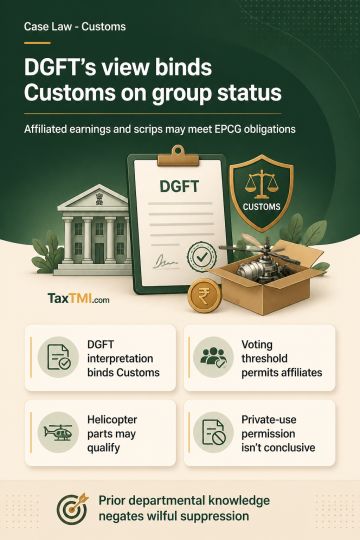
Actual-user customs exemption conditions permit turnkey project transfers when imported windmill components are exclusively used for installation and ...
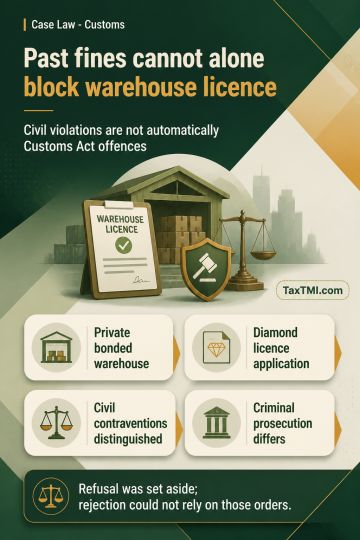
Customs offence disqualification excludes civil contraventions, preventing refusal of a private bonded warehouse licence based solely on monetary pena...
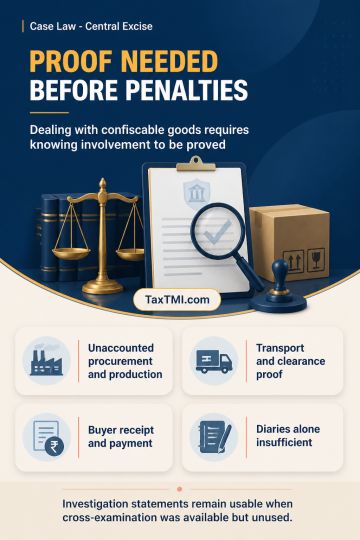
Penalty under Rule 26 for dealing in goods liable to confiscation requires proof that the person acquired, possessed or dealt with excisable goods knowing or believing them to be liable to confiscation. Allegations of clandestine removal require affirmative evidence across the production and supply chain, including unaccounted procurement and production, transport and clearance, identified buyers' receipt, and unaccounted consideration; recovered diaries or notepads alone do not establish their contents as true. Statements recorded during investigation may be relied on where examination and cross-examination opportunities were provided but not used, without violating natural justice.
Penalty under Rule 26 for dealing in goods liable to confiscation requires proof that the person acquired, possessed or dealt with excisable goods knowing or believing them to be liable to confiscation. Allegations of clandestine removal require affirmative evidence across the production and supply chain, including unaccounted procurement and production, transport and clearance, identified buyers' receipt, and unaccounted consideration; recovered diaries or notepads alone do not establish their contents as true. Statements recorded during investigation may be relied on where examination and cross-examination opportunities were provided but not used, without violating natural justice.
Note: It is a system-generated summary and is for quick reference only.
 TaxTMI
  TaxTMI
 of 4891