Effective hearing in GST adjudication requires actual opportunity to respond; ineffective service through a former auditor invalidated ex parte procee...
Third-party search material requires special assessment route, rendering general reassessment notices without jurisdiction when it forms the proceedin...
Transfer-pricing adjustments must be confined to international associated-enterprise transactions, while functionally dissimilar comparables remain ex...
Insolvency moratorium bars income-tax revision proceedings against corporate debtors until the moratorium ends, preserving merits for later determinat...
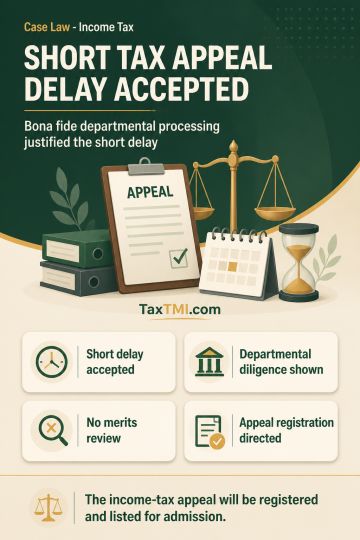
Section 260A(2A) of the Income Tax Act does not expressly exclude application of the Limitation Act, declare the High Court functus officio after expiry of the appeal period, or contain restrictive wording barring condonation. Departmental processing, approval, preparation and execution of the appeal memorandum collectively established sufficient cause and bona fide diligence for a short delay. Merits of the proposed appeal should not be examined while deciding limitation, as that would compromise fairness at the admission stage. The delay was condoned, and the income-tax appeal was directed to be registered and listed for admission.
Section 260A(2A) of the Income Tax Act does not expressly exclude application of the Limitation Act, declare the High Court functus officio after expiry of the appeal period, or contain restrictive wording barring condonation. Departmental processing, approval, preparation and execution of the appeal memorandum collectively established sufficient cause and bona fide diligence for a short delay. Merits of the proposed appeal should not be examined while deciding limitation, as that would compromise fairness at the admission stage. The delay was condoned, and the income-tax appeal was directed to be registered and listed for admission.
Note: It is a system-generated summary and is for quick reference only.
 TaxTMI
  TaxTMI
 of 4886