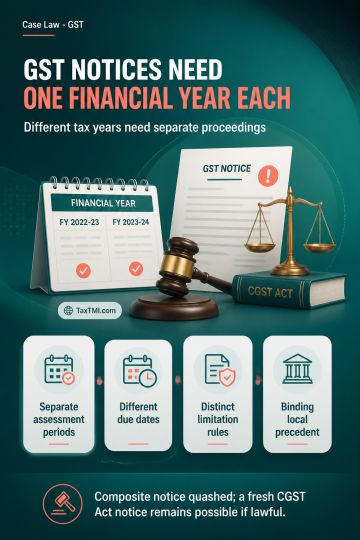
Year-wise GST tax periods make composite show cause notices impermissible, requiring separate proceedings despite contrary non-jurisdictional preceden...
Prior APA methodology guides transfer pricing benchmarking where consistent FAR profiles support comparability and arm's length margins eliminate adju...
Page of 4888
Press 'Enter' after typing page number.
821 to 840 of 97755 Results
❮
❯
❯❯
0 / 200
Expand Note
Add to Folder
No Folders have been created
+
Are you sure you want to delete "My most important" ?
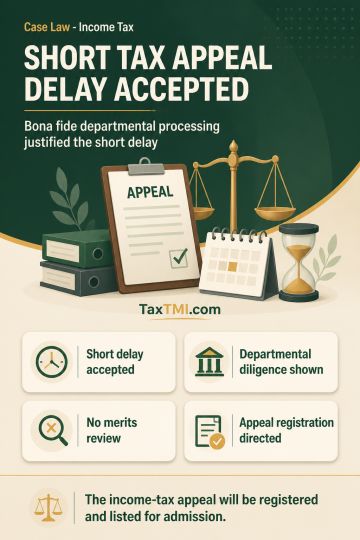
Section 260A(2A) of the Income Tax Act does not expressly exclude application of the Limitation Act, declare the High Court functus officio after expiry of the appeal period, or contain restrictive wording barring condonation. Departmental processing, approval, preparation and execution of the appeal memorandum collectively established sufficient cause and bona fide diligence for a short delay. Merits of the proposed appeal should not be examined while deciding limitation, as that would compromise fairness at the admission stage. The delay was condoned, and the income-tax appeal was directed to be registered and listed for admission.
Section 260A(2A) of the Income Tax Act does not expressly exclude application of the Limitation Act, declare the High Court functus officio after expiry of the appeal period, or contain restrictive wording barring condonation. Departmental processing, approval, preparation and execution of the appeal memorandum collectively established sufficient cause and bona fide diligence for a short delay. Merits of the proposed appeal should not be examined while deciding limitation, as that would compromise fairness at the admission stage. The delay was condoned, and the income-tax appeal was directed to be registered and listed for admission.
Note: It is a system-generated summary and is for quick reference only.
 TaxTMI
  TaxTMI
 of 4888