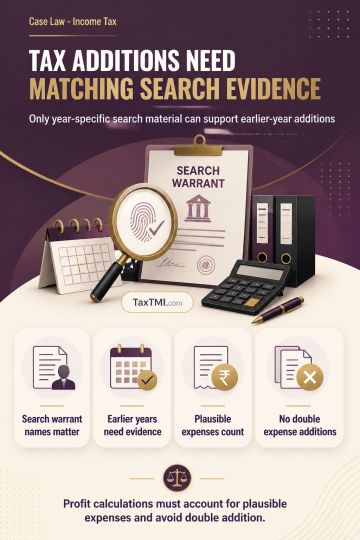
Section 153C requires person-specific search authority and year-specific incriminating material for unabated assessments while preventing unsupported ...
Equivalent-value attachment can reach pre-existing assets, but jointly owned property remains protected beyond the accused's attributable proceeds of ...
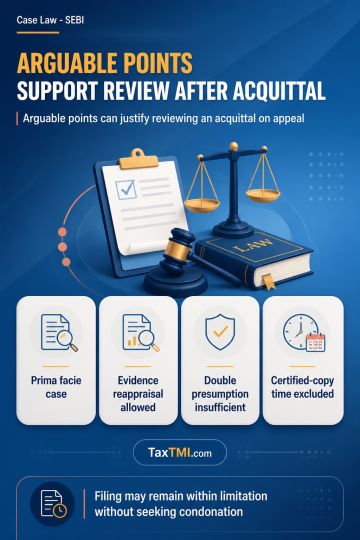
Leave to appeal against an acquittal requires the Court to determine whether a prima facie case or arguable points warrant examination. It need not minutely evaluate evidence or conclusively decide whether the acquittal is perverse at that stage. Where the record requires reappreciation, review or reconsideration of evidence, leave should be granted and merits considered in the criminal appeal; the double presumption of innocence does not itself justify refusing leave. For limitation, time spent processing and obtaining a certified copy of the impugned judgment is excluded, and the effective filing period may therefore fall within the prescribed limit without condonation.
Leave to appeal against an acquittal requires the Court to determine whether a prima facie case or arguable points warrant examination. It need not minutely evaluate evidence or conclusively decide whether the acquittal is perverse at that stage. Where the record requires reappreciation, review or reconsideration of evidence, leave should be granted and merits considered in the criminal appeal; the double presumption of innocence does not itself justify refusing leave. For limitation, time spent processing and obtaining a certified copy of the impugned judgment is excluded, and the effective filing period may therefore fall within the prescribed limit without condonation.
Note: It is a system-generated summary and is for quick reference only.
 TaxTMI
  TaxTMI
 of 4888