GST refunds for cancelled air tickets remain available when passenger reimbursements defeat unjust enrichment and credit-note adjustment is unavailabl...
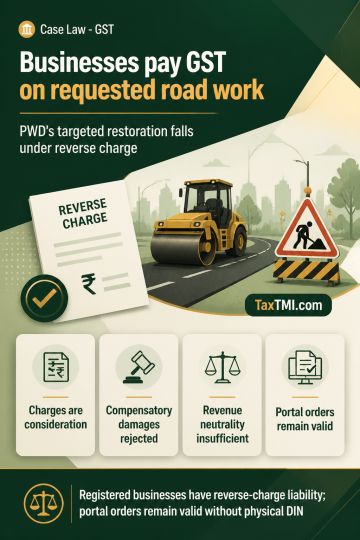
Request-driven road restoration attracts reverse-charge GST, not governmental-function treatment or compensatory-damages status for business recipient...
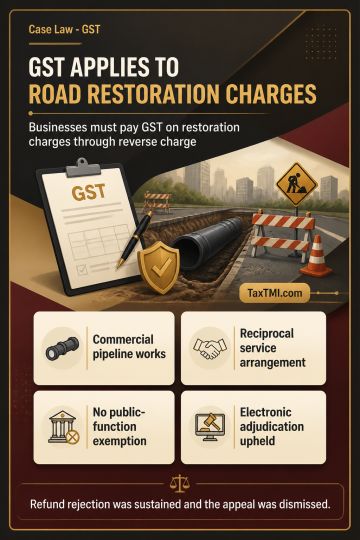
Road restoration charges for commercial pipeline works are taxable Government services, with reverse charge liability and no public-function exemption...
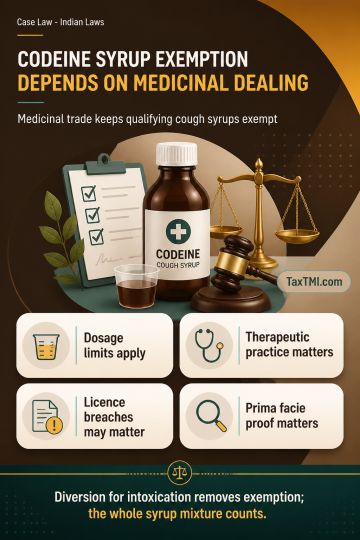
Entry 35 exempts codeine cough-syrup preparations compounded within prescribed dosage and concentration limits and established in therapeutic practice when dealt with in the ordinary course of medicinal business. Routine sales without prescription or ordinary licence breaches ordinarily attract action under the Drugs and Cosmetics Act unless non-medicinal diversion is established; licence-condition breaches involving narcotic drugs may also permit NDPS prosecution. Diversion for intoxication removes the exemption and renders the preparation a manufactured drug, with the entire syrup mixture relevant to quantity assessment. Regular bail depends on prima facie proof of conscious possession, trafficking, conspiracy, or diversion; sealed consignments, mere employment, or uncorroborated allegations may be insufficient.
Entry 35 exempts codeine cough-syrup preparations compounded within prescribed dosage and concentration limits and established in therapeutic practice when dealt with in the ordinary course of medicinal business. Routine sales without prescription or ordinary licence breaches ordinarily attract action under the Drugs and Cosmetics Act unless non-medicinal diversion is established; licence-condition breaches involving narcotic drugs may also permit NDPS prosecution. Diversion for intoxication removes the exemption and renders the preparation a manufactured drug, with the entire syrup mixture relevant to quantity assessment. Regular bail depends on prima facie proof of conscious possession, trafficking, conspiracy, or diversion; sealed consignments, mere employment, or uncorroborated allegations may be insufficient.
Note: It is a system-generated summary and is for quick reference only.
 TaxTMI
  TaxTMI
 of 4918