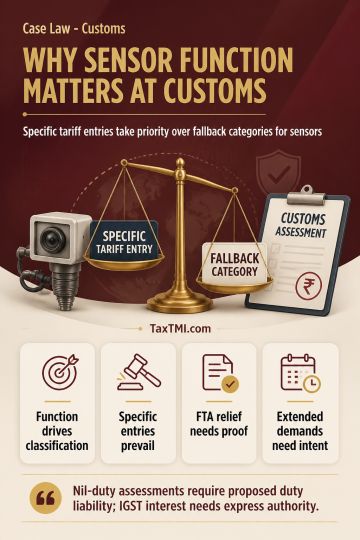
Prospective customs notification amendments cannot bar provisional release consideration for earlier imports when bills of lading predate their commen...
Personal guarantor insolvency jurisdiction follows the corporate debtor's CIRP Bench, enabling inter-territorial transfer and preventing parallel proc...
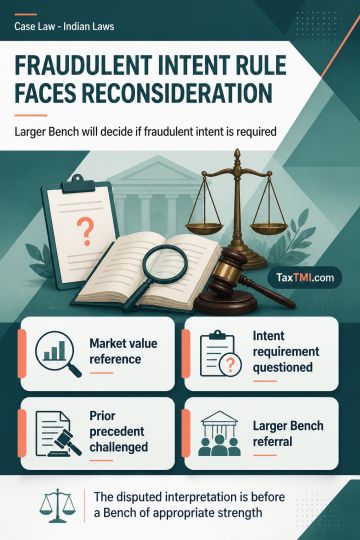
Section 47-A undervaluation threshold: fraudulent intent requirement faces reconsideration after referral to a larger Bench for authoritative resoluti...
RBI supersession powers over multi-State co-operative banks operate independently of the constitutional six-month ceiling and permit statutory extensi...
Third-party seized loose sheets can support an on-money addition only when corroborated or demonstrably connected to the assessee's business. Where flat-level particulars, cash receipts, the developer's role and offered profit established that connection, the Tribunal sustained the finding and quantification of on-money receipts, rejecting unsupported claims of duplicate entries, prior assessment and booking cancellations. As unaccounted real-estate receipts are business receipts, only their embedded profit is taxable; lacking a basis for a higher rate, the Tribunal reduced the estimated profit rate to 8 percent. No further telescoping was available because unaccounted expenditure had already been accepted as met from those receipts. Mere initiation of penalty proceedings was not appealable and the challenge was premature.
Third-party seized loose sheets can support an on-money addition only when corroborated or demonstrably connected to the assessee's business. Where flat-level particulars, cash receipts, the developer's role and offered profit established that connection, the Tribunal sustained the finding and quantification of on-money receipts, rejecting unsupported claims of duplicate entries, prior assessment and booking cancellations. As unaccounted real-estate receipts are business receipts, only their embedded profit is taxable; lacking a basis for a higher rate, the Tribunal reduced the estimated profit rate to 8 percent. No further telescoping was available because unaccounted expenditure had already been accepted as met from those receipts. Mere initiation of penalty proceedings was not appealable and the challenge was premature.
Note: It is a system-generated summary and is for quick reference only.
 TaxTMI
  TaxTMI
 of 4884