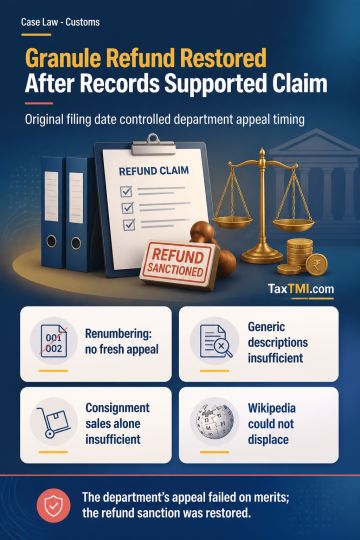
Departmental appeal limitation after call-book recall preserves original filing, while documented correlation supports SAD refund on imported granules...
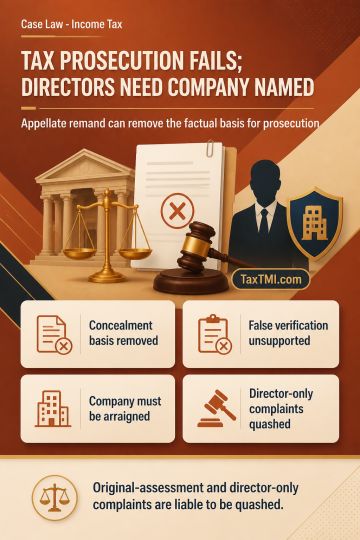
Income-tax prosecution fails when appellate remand removes its factual foundation; directors require company arraignment for vicarious criminal liabil...
Capital character of assignment consideration prevents taxation as residuary income, while unsupported interest-related expenditure remains non-deduct...
Make-available condition shields regional support-service receipts from Indian taxation where no independent capability or permanent establishment exi...
Transfer-pricing treatment of corporate guarantees and convertible loans followed prior-year consistency, with taxable foreign dividends excluded from...
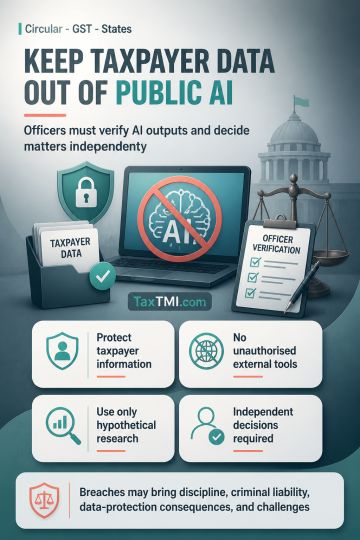
Taxpayer confidentiality bars officers and staff from transmitting identifiable taxpayer information or departmental data to public or commercial AI tools, third-party online platforms, external systems, browser extensions or personal accounts unless expressly authorised in writing. Permitted AI use is limited to generic, wholly hypothetical legal or procedural research and drafting support, with independent verification against primary sources. Officers remain personally responsible for disclosures made by themselves or persons acting under their control; breaches may lead to disciplinary action, criminal liability, data-protection consequences and challenges to affected proceedings. Notices and quasi-judicial orders must reflect the signing officer's independent assessment of facts and law, not unverified or mechanically adopted AI-generated content.
Taxpayer confidentiality bars officers and staff from transmitting identifiable taxpayer information or departmental data to public or commercial AI tools, third-party online platforms, external systems, browser extensions or personal accounts unless expressly authorised in writing. Permitted AI use is limited to generic, wholly hypothetical legal or procedural research and drafting support, with independent verification against primary sources. Officers remain personally responsible for disclosures made by themselves or persons acting under their control; breaches may lead to disciplinary action, criminal liability, data-protection consequences and challenges to affected proceedings. Notices and quasi-judicial orders must reflect the signing officer's independent assessment of facts and law, not unverified or mechanically adopted AI-generated content.
Note: It is a system-generated summary and is for quick reference only.
 TaxTMI
  TaxTMI
 of 4888