Business expenditure and depreciation rules allow operational outgoings while limiting disallowances for personal elements and unsupported third-party...
Compromise-and-arrangement extensions may accommodate debt assignment where creditor commercial judgment supports value maximisation and avoids proced...
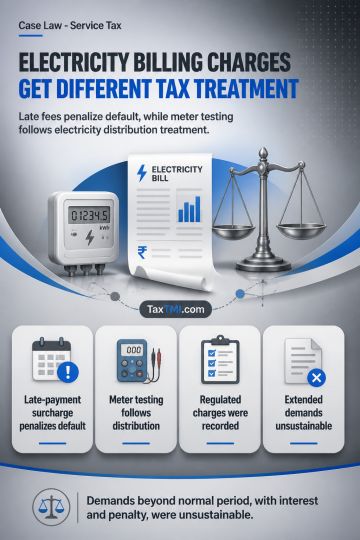
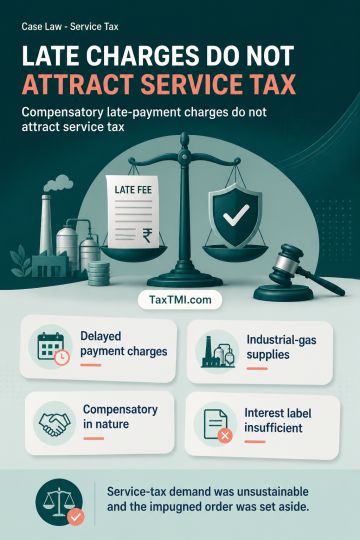
Delayed-payment surcharge is not taxable tolerance consideration where it penalises default, while meter testing follows electricity distribution trea...
Sufficient cause for delayed revenue income-tax appeals requires bona fides, due diligence and a credible explanation; otherwise limitation bars appea...
Inverted-duty-structure refunds remain available for unchanged-rate apparel supplies despite trader status and require tax-period-specific computation...
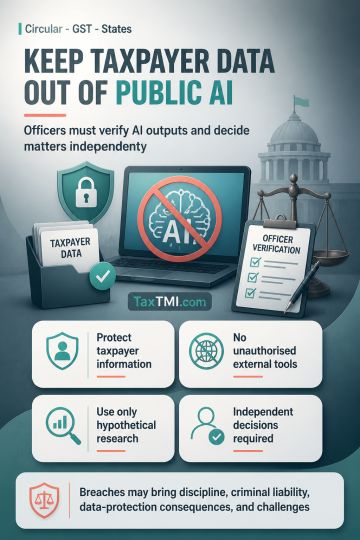
Taxpayer confidentiality bars officers and staff from transmitting identifiable taxpayer information or departmental data to public or commercial AI tools, third-party online platforms, external systems, browser extensions or personal accounts unless expressly authorised in writing. Permitted AI use is limited to generic, wholly hypothetical legal or procedural research and drafting support, with independent verification against primary sources. Officers remain personally responsible for disclosures made by themselves or persons acting under their control; breaches may lead to disciplinary action, criminal liability, data-protection consequences and challenges to affected proceedings. Notices and quasi-judicial orders must reflect the signing officer's independent assessment of facts and law, not unverified or mechanically adopted AI-generated content.
Taxpayer confidentiality bars officers and staff from transmitting identifiable taxpayer information or departmental data to public or commercial AI tools, third-party online platforms, external systems, browser extensions or personal accounts unless expressly authorised in writing. Permitted AI use is limited to generic, wholly hypothetical legal or procedural research and drafting support, with independent verification against primary sources. Officers remain personally responsible for disclosures made by themselves or persons acting under their control; breaches may lead to disciplinary action, criminal liability, data-protection consequences and challenges to affected proceedings. Notices and quasi-judicial orders must reflect the signing officer's independent assessment of facts and law, not unverified or mechanically adopted AI-generated content.
Note: It is a system-generated summary and is for quick reference only.
 TaxTMI
  TaxTMI
 of 4888