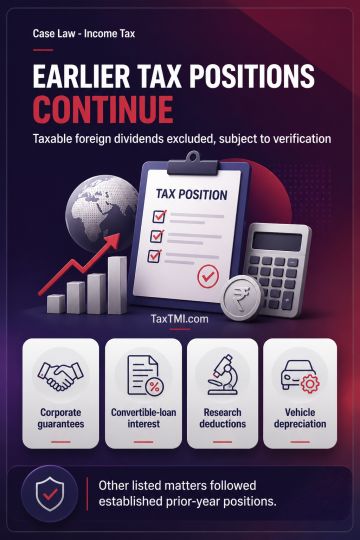
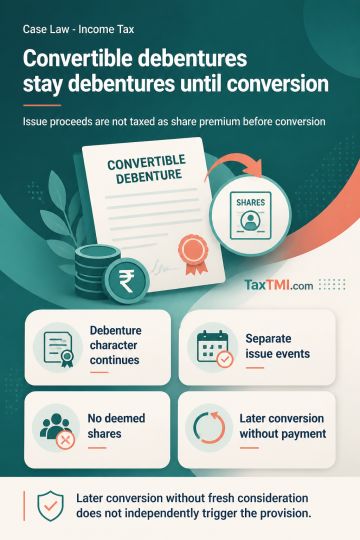
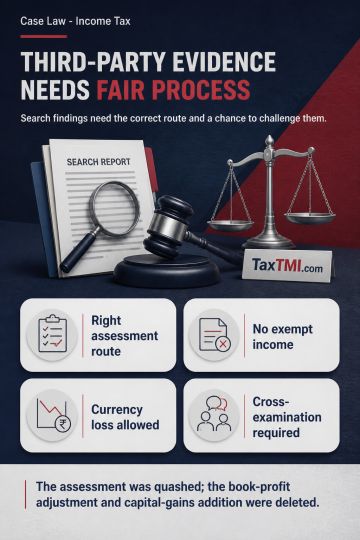
Transfer-pricing treatment of corporate guarantees and convertible loans followed prior-year consistency, with taxable foreign dividends excluded from...
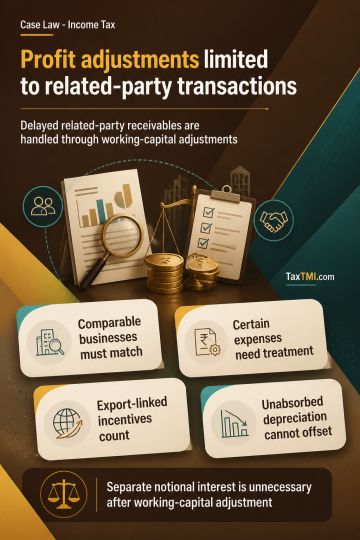
Transfer-pricing benchmarking confines adjustments to associated-enterprise transactions and integrates delayed receivables through TNMM working-capit...
Medical relief status protects government-contracted mobile healthcare from commercial classification, while provisional registration cancellation req...
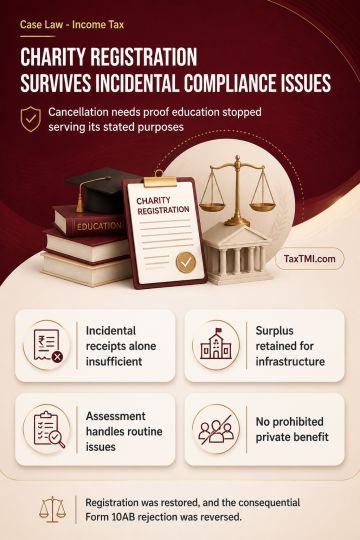
Charitable registration cancellation requires proof that educational activities abandoned their objects; incidental receipts and retained surplus are ...
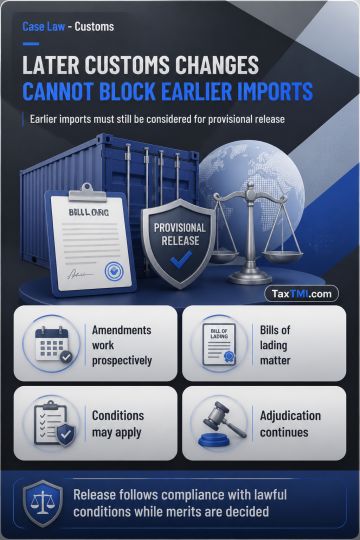
Prospective customs notification amendments cannot bar provisional release consideration for earlier imports when bills of lading predate their commen...
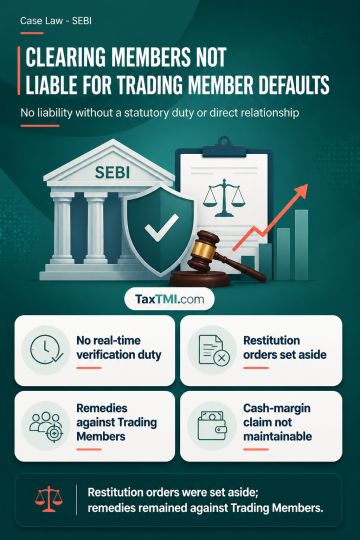
Professional Clearing Members had no statutory duty or real-time regulatory visibility to verify individual Trading Member clients' debit and credit positions before collateral liquidation; the applicable framework treated the Trading Member as their constituent and restricted cross-use of margin only between Trading Members. No regulatory breach was established. Clearing committees could not order restitution of liquidated securities or block equivalent collateral, because stock-exchange bye-laws excluded monetary penalties and no substantive statutory power supported those measures. Individual clients had no claim against Professional Clearing Members for Trading Members' defaults under illegal assured-return schemes, absent privity or regulatory breach; remedies remained against Trading Members. Restitution orders were set aside, while the investor's cash-margin claim was not maintainable.
Professional Clearing Members had no statutory duty or real-time regulatory visibility to verify individual Trading Member clients' debit and credit positions before collateral liquidation; the applicable framework treated the Trading Member as their constituent and restricted cross-use of margin only between Trading Members. No regulatory breach was established. Clearing committees could not order restitution of liquidated securities or block equivalent collateral, because stock-exchange bye-laws excluded monetary penalties and no substantive statutory power supported those measures. Individual clients had no claim against Professional Clearing Members for Trading Members' defaults under illegal assured-return schemes, absent privity or regulatory breach; remedies remained against Trading Members. Restitution orders were set aside, while the investor's cash-margin claim was not maintainable.
Note: It is a system-generated summary and is for quick reference only.
 TaxTMI
  TaxTMI
 of 4886