RBI supersession powers over multi-State co-operative banks operate independently of the constitutional six-month ceiling and permit statutory extensi...
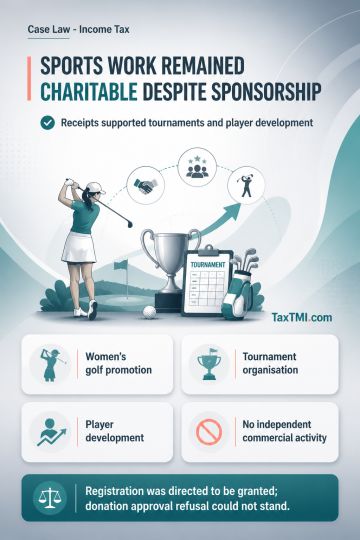
Charitable sports promotion: sponsorship receipts alone did not defeat registration where funds supported tournaments and player development activitie...
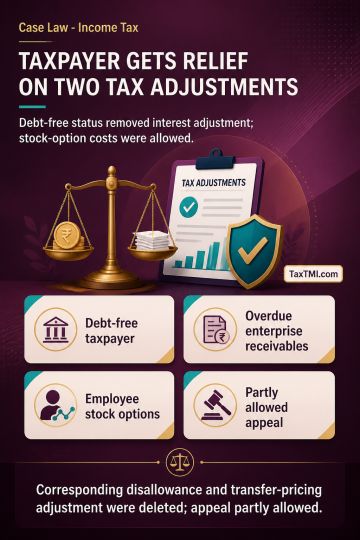
Overdue associated-enterprise receivables: debt-free status defeated notional-interest adjustment, while employee stock-option costs qualified as busi...
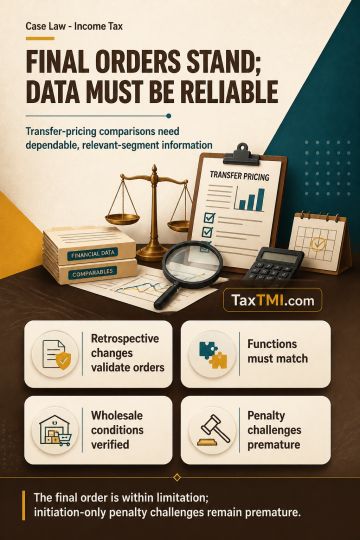
Retrospective assessment-limitation amendments validate final orders while contemporaneous segment data governs transfer-pricing comparability and tol...
Page of 4886
Press 'Enter' after typing page number.
1021 to 1040 of 97710 Results
❮
❯
❯❯
0 / 200
Expand Note
Add to Folder
No Folders have been created
+
Are you sure you want to delete "My most important" ?
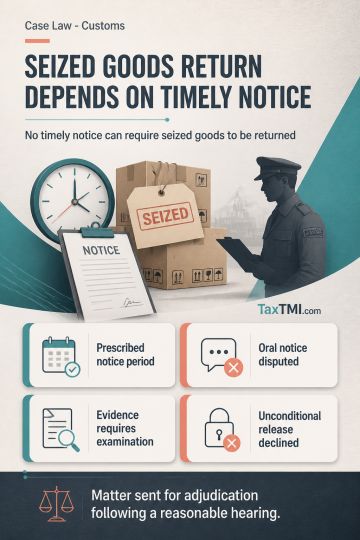
Statutory return of seized goods under Section 110(2) of the Customs Act arises where no notice is issued within the prescribed period or a validly extended period; continued retention is then impermissible. Compliance with Section 124 was disputed because the Department relied on contemporaneous proceedings as an oral show cause notice, while the affected parties challenged the documents' execution, explanation and voluntariness. Determining whether an oral notice satisfied statutory requirements required examination of statements and contemporaneous material, making writ jurisdiction unsuitable for resolving the factual dispute. Unconditional release was declined, with adjudication directed after a reasonable hearing.
Statutory return of seized goods under Section 110(2) of the Customs Act arises where no notice is issued within the prescribed period or a validly extended period; continued retention is then impermissible. Compliance with Section 124 was disputed because the Department relied on contemporaneous proceedings as an oral show cause notice, while the affected parties challenged the documents' execution, explanation and voluntariness. Determining whether an oral notice satisfied statutory requirements required examination of statements and contemporaneous material, making writ jurisdiction unsuitable for resolving the factual dispute. Unconditional release was declined, with adjudication directed after a reasonable hearing.
Note: It is a system-generated summary and is for quick reference only.
 TaxTMI
  TaxTMI
 of 4886