Provisional attachment fails without material showing likely concealment, transfer, or dealing that could frustrate confiscation of mortgaged property...
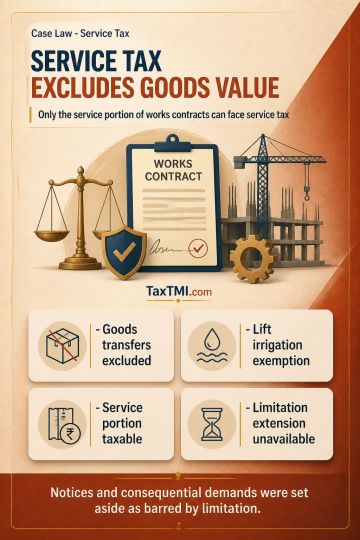
Works-contract goods transfers remain outside service tax, while qualifying lift irrigation works receive exemption and extended limitation cannot app...
Customs assessment information portal centralises rulings and guidance to promote consistent classification, valuation, transparency and informed comp...
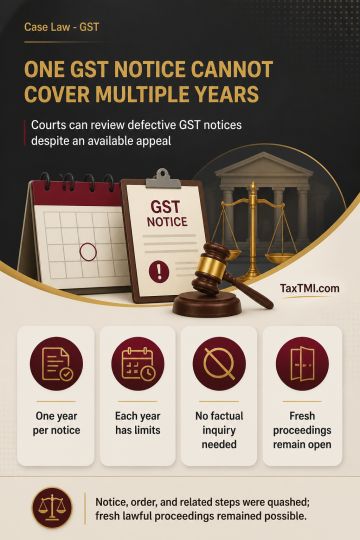
Composite show-cause notices spanning multiple financial years are jurisdictionally invalid, allowing writ review despite an alternative appellate rem...
Page of 4886
Press 'Enter' after typing page number.
1101 to 1120 of 97705 Results
❮
❯
❯❯
0 / 200
Expand Note
Add to Folder
No Folders have been created
+
Are you sure you want to delete "My most important" ?
Exhaustion of an efficacious statutory appellate remedy is the...
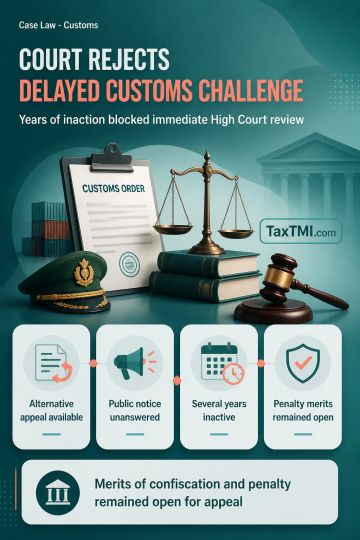
Alternative statutory remedy and unexplained delay barred writ review of customs confiscation adjudication, leaving merits for appellate consideration.
Contents
Summary
Note
Bookmark
Share
✓ Copied successfully !
Print
Print Options
For full text, please login
Login to TaxTMI
Verification Pending
The Email Id has not been verified. Click on the link we have sent on
Exhaustion of an efficacious statutory appellate remedy is the governing rule for challenges to customs adjudication in writ jurisdiction, though it is not an absolute bar. Challenges relating to notice service, denial of hearing, purported waiver and the adjudication record should be examined through the statutory appeal where the Order-in-Original is appealable. The High Court declined writ jurisdiction because the petitioner remained inactive for several years despite knowledge of seizure, did not respond to public notice, and gave no satisfactory explanation for delay. The writ petition was dismissed for delay and laches, with the available appeal providing an additional ground; merits of confiscation and penalty remained open.
Exhaustion of an efficacious statutory appellate remedy is the governing rule for challenges to customs adjudication in writ jurisdiction, though it is not an absolute bar. Challenges relating to notice service, denial of hearing, purported waiver and the adjudication record should be examined through the statutory appeal where the Order-in-Original is appealable. The High Court declined writ jurisdiction because the petitioner remained inactive for several years despite knowledge of seizure, did not respond to public notice, and gave no satisfactory explanation for delay. The writ petition was dismissed for delay and laches, with the available appeal providing an additional ground; merits of confiscation and penalty remained open.
Note: It is a system-generated summary and is for quick reference only.
 TaxTMI
  TaxTMI
 of 4886