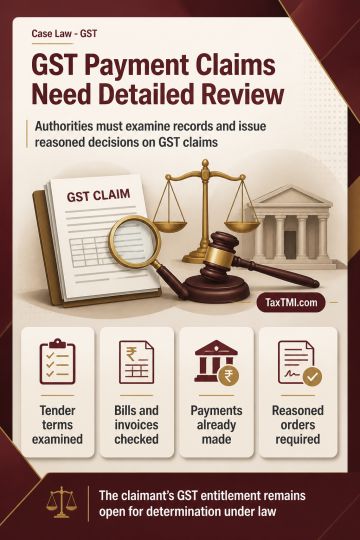
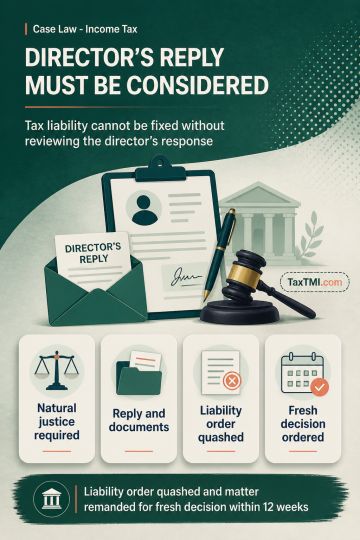
GST payment representations require record-based, reasoned decisions while substantive entitlement remains open for determination by competent authori...
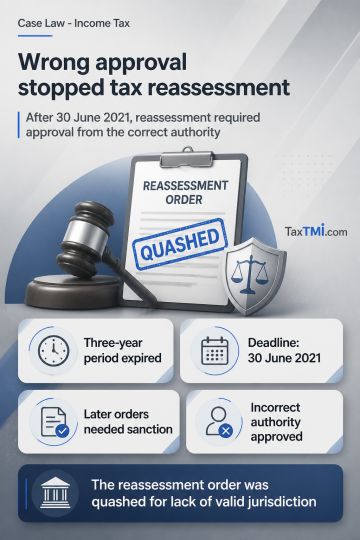
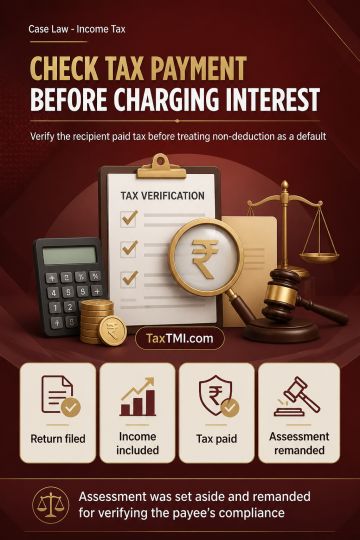
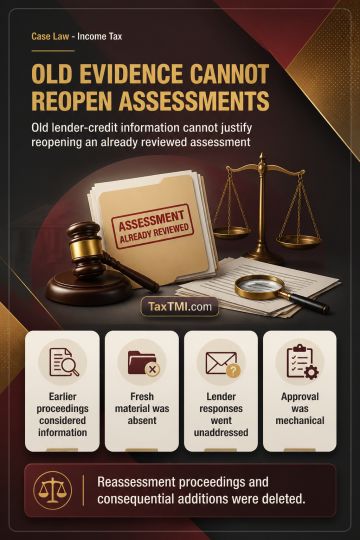
Reassessment sanction under extended limitation required approval from the competent specified authority, invalidating proceedings approved by an inco...
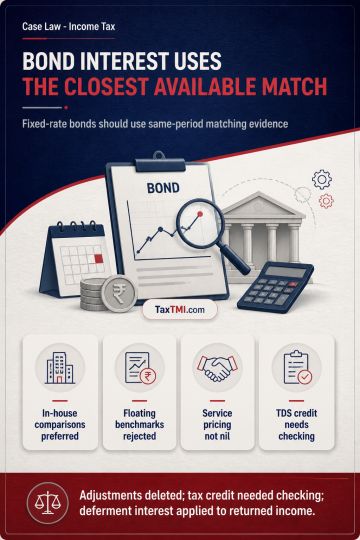
Internal CUP benchmarking for fixed-rate Masala Bonds prevails over floating external comparables, eliminating the related transfer-pricing adjustment...
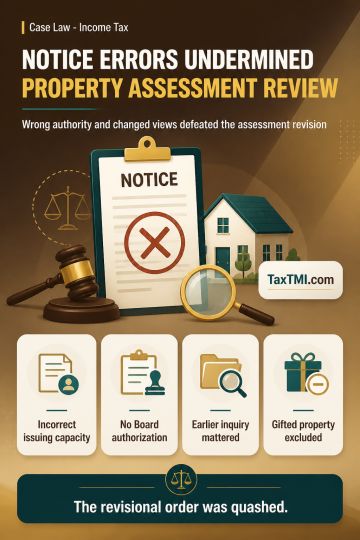
Jurisdictional validity of revision notices: incorrect official capacity and mere change of opinion invalidate revision of property income assessments...
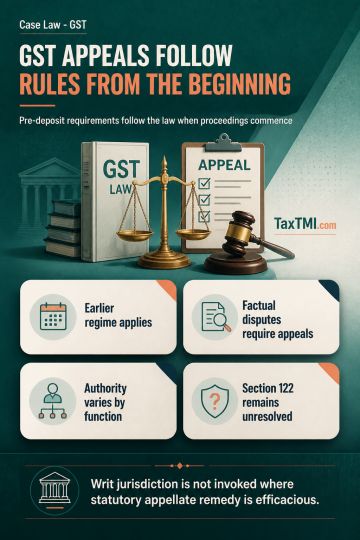
Exhaustion of an efficacious statutory appellate remedy is the...
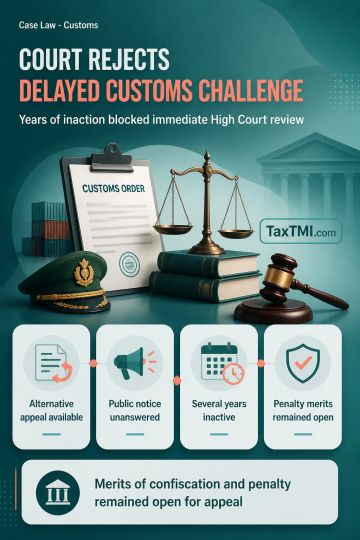
Alternative statutory remedy and unexplained delay barred writ review of customs confiscation adjudication, leaving merits for appellate consideration.
Contents
Summary
Note
Bookmark
Share
✓ Copied successfully !
Print
Print Options
For full text, please login
Login to TaxTMI
Verification Pending
The Email Id has not been verified. Click on the link we have sent on
Exhaustion of an efficacious statutory appellate remedy is the governing rule for challenges to customs adjudication in writ jurisdiction, though it is not an absolute bar. Challenges relating to notice service, denial of hearing, purported waiver and the adjudication record should be examined through the statutory appeal where the Order-in-Original is appealable. The High Court declined writ jurisdiction because the petitioner remained inactive for several years despite knowledge of seizure, did not respond to public notice, and gave no satisfactory explanation for delay. The writ petition was dismissed for delay and laches, with the available appeal providing an additional ground; merits of confiscation and penalty remained open.
Exhaustion of an efficacious statutory appellate remedy is the governing rule for challenges to customs adjudication in writ jurisdiction, though it is not an absolute bar. Challenges relating to notice service, denial of hearing, purported waiver and the adjudication record should be examined through the statutory appeal where the Order-in-Original is appealable. The High Court declined writ jurisdiction because the petitioner remained inactive for several years despite knowledge of seizure, did not respond to public notice, and gave no satisfactory explanation for delay. The writ petition was dismissed for delay and laches, with the available appeal providing an additional ground; merits of confiscation and penalty remained open.
Note: It is a system-generated summary and is for quick reference only.
 TaxTMI
  TaxTMI
 of 4886