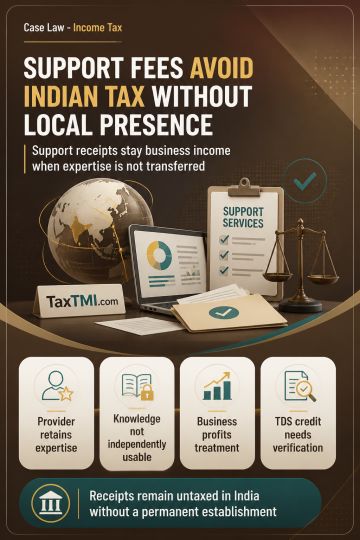
Make-available condition shields regional support-service receipts from Indian taxation where no independent capability or permanent establishment exi...
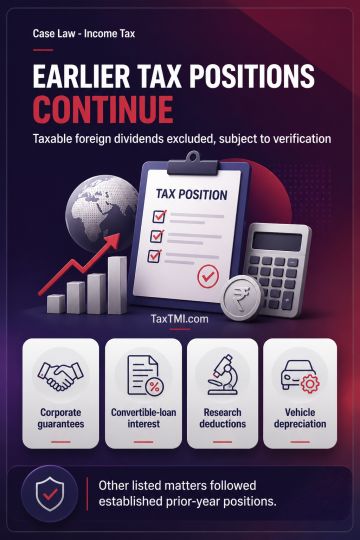
Transfer-pricing treatment of corporate guarantees and convertible loans followed prior-year consistency, with taxable foreign dividends excluded from...
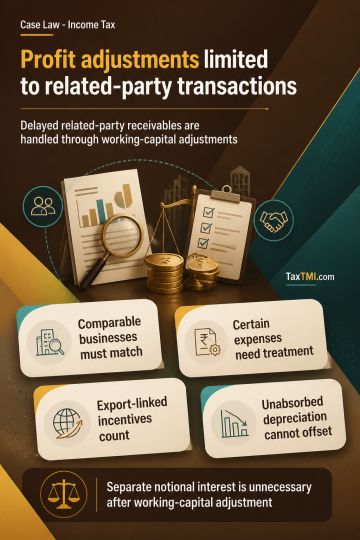
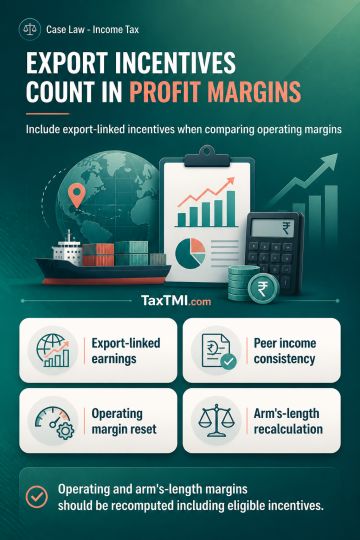
Transfer-pricing benchmarking confines adjustments to associated-enterprise transactions and integrates delayed receivables through TNMM working-capit...
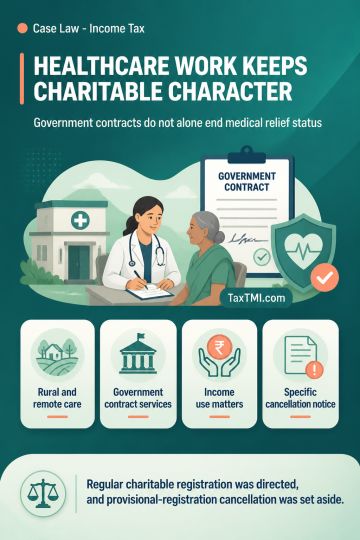
Medical relief status protects government-contracted mobile healthcare from commercial classification, while provisional registration cancellation req...
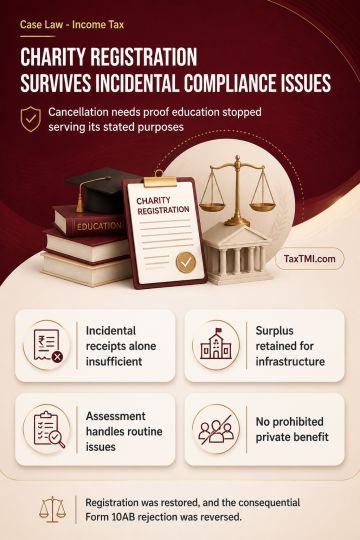
Charitable registration cancellation requires proof that educational activities abandoned their objects; incidental receipts and retained surplus are ...
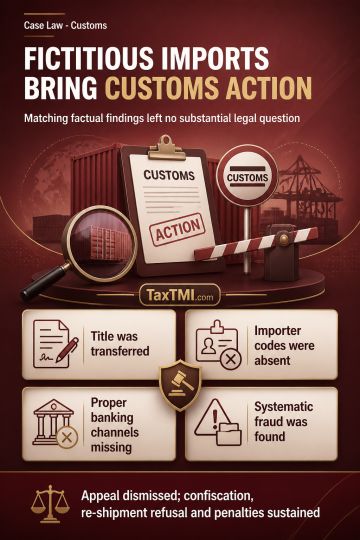
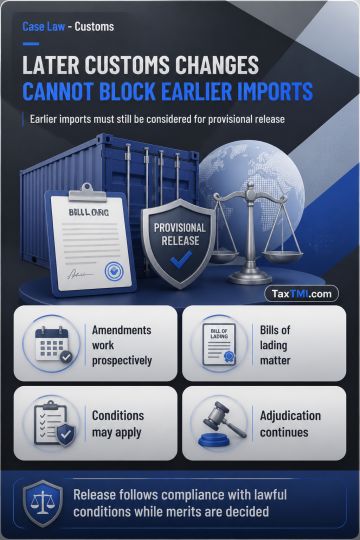
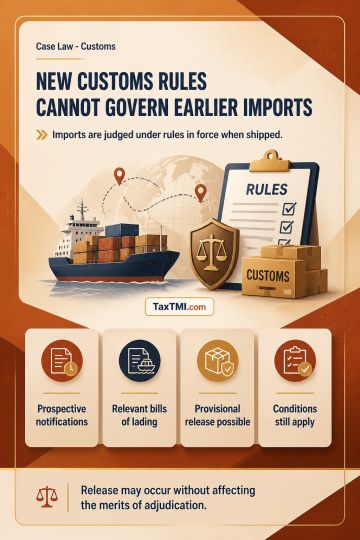
Prospective customs notification amendments cannot bar provisional release consideration for earlier imports when bills of lading predate their commen...
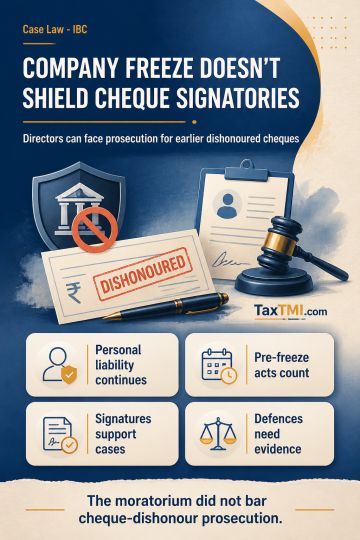
IBC moratorium protects the corporate debtor but does not suspend or extinguish the personal statutory liability of directors or authorised signatories for cheque dishonour under the Negotiable Instruments Act. Expiry of the payment period after commencement of the moratorium is relevant but not conclusive. Specific allegations concerning the signatory's responsibility, issuance of cheques, and admitted signatures can sustain prosecution despite suspension of the board's powers, which does not retrospectively erase pre-moratorium acts. Defences based on knowledge, due diligence, or appointment of an insolvency professional require trial evidence and cannot ordinarily be determined in quashing proceedings. Accordingly, the moratorium did not bar the cheque-dishonour prosecution.
IBC moratorium protects the corporate debtor but does not suspend or extinguish the personal statutory liability of directors or authorised signatories for cheque dishonour under the Negotiable Instruments Act. Expiry of the payment period after commencement of the moratorium is relevant but not conclusive. Specific allegations concerning the signatory's responsibility, issuance of cheques, and admitted signatures can sustain prosecution despite suspension of the board's powers, which does not retrospectively erase pre-moratorium acts. Defences based on knowledge, due diligence, or appointment of an insolvency professional require trial evidence and cannot ordinarily be determined in quashing proceedings. Accordingly, the moratorium did not bar the cheque-dishonour prosecution.
Note: It is a system-generated summary and is for quick reference only.
 TaxTMI
  TaxTMI
 of 4888