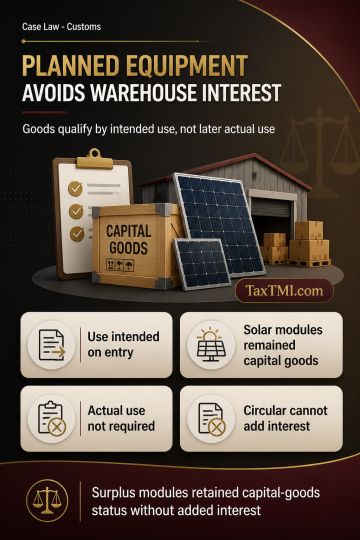
Independent manufacturing undertaking eligibility preserves Section 80IA/80IB deductions, while machinery kept ready for use qualifies for depreciatio...
Assessing Officer Satisfaction Requirement Bars Penalty for Cash Receipt in Immovable-Property Sale Cases Where Initiation Lacks Recorded Satisfaction...
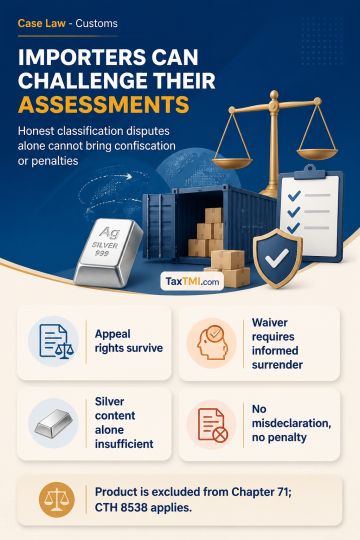
Self-assessed import entries remain appealable, while bona fide classification disputes without misdeclaration cannot justify confiscation or penaltie...
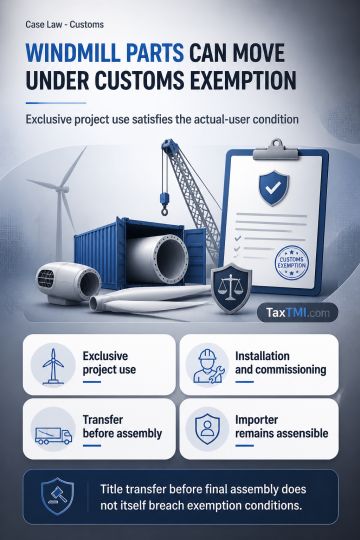
Actual-user customs exemption conditions permit turnkey project transfers when imported windmill components are exclusively used for installation and ...
Customs offence disqualification excludes civil contraventions, preventing refusal of a private bonded warehouse licence based solely on monetary pena...
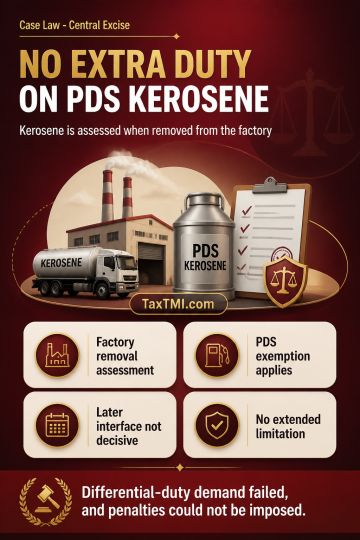
Excise assessment of superior kerosene oil is determined by its form and exemption eligibility at factory removal. Kerosene cleared for sale through the Public Distribution System after satisfying exemption conditions does not become assessable at motor-spirit or high-speed-diesel rates merely because it later forms a pipeline interface beyond the refinery; an administrative circular cannot create liability contrary to governing provisions. The differential-duty demand on interface kerosene was therefore unsustainable. Extended limitation requires evidence of suppression or wilful misstatement with intent to evade duty; departmental ability to inquire and a bona fide belief defeated its use. Without such evidence, penalties against the entities and employee were not imposable.
Excise assessment of superior kerosene oil is determined by its form and exemption eligibility at factory removal. Kerosene cleared for sale through the Public Distribution System after satisfying exemption conditions does not become assessable at motor-spirit or high-speed-diesel rates merely because it later forms a pipeline interface beyond the refinery; an administrative circular cannot create liability contrary to governing provisions. The differential-duty demand on interface kerosene was therefore unsustainable. Extended limitation requires evidence of suppression or wilful misstatement with intent to evade duty; departmental ability to inquire and a bona fide belief defeated its use. Without such evidence, penalties against the entities and employee were not imposable.
Note: It is a system-generated summary and is for quick reference only.
 TaxTMI
  TaxTMI
 of 4897