Charitable sports promotion: sponsorship receipts alone did not defeat registration where funds supported tournaments and player development activitie...
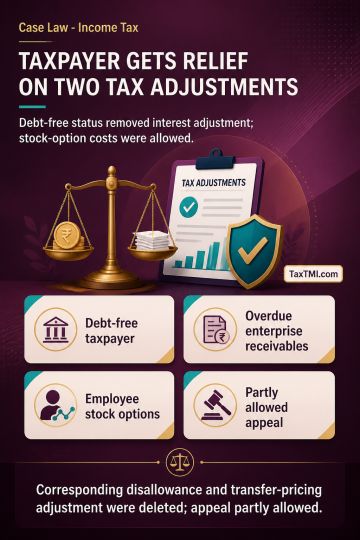
Overdue associated-enterprise receivables: debt-free status defeated notional-interest adjustment, while employee stock-option costs qualified as busi...
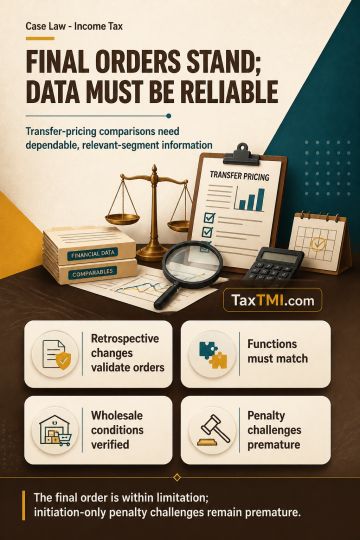
Retrospective assessment-limitation amendments validate final orders while contemporaneous segment data governs transfer-pricing comparability and tol...
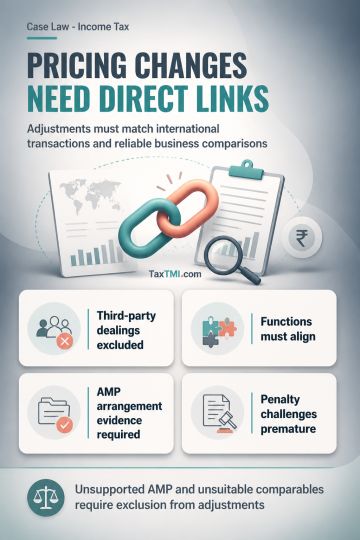
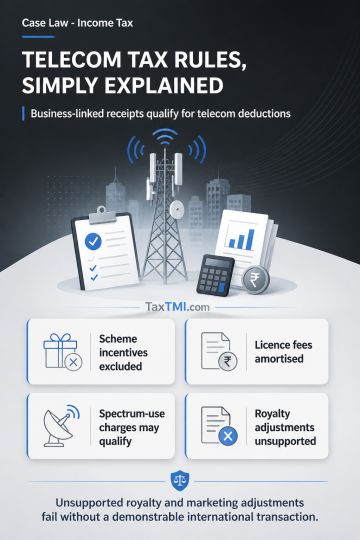
Transfer pricing adjustments must track international transactions, while unsupported AMP adjustments and unsuitable manufacturing comparables require...
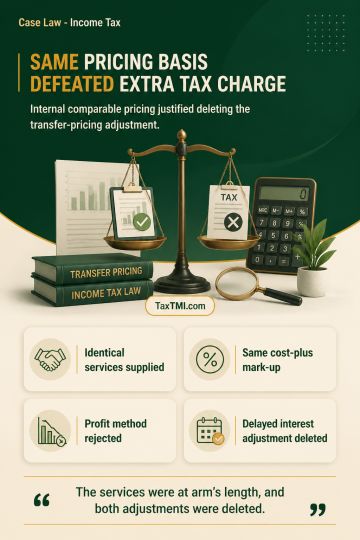
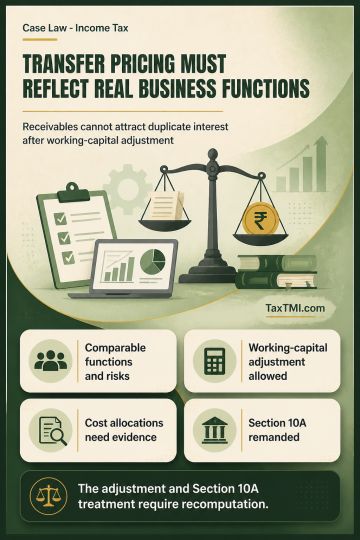
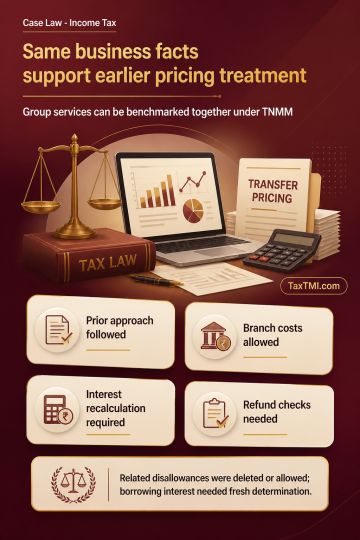
Transfer-pricing adjustments must reflect functional comparability, working-capital effects, and avoid duplicating interest on associated-enterprise r...
Under TNMM, a Basmati rice trader that only procures and exports...
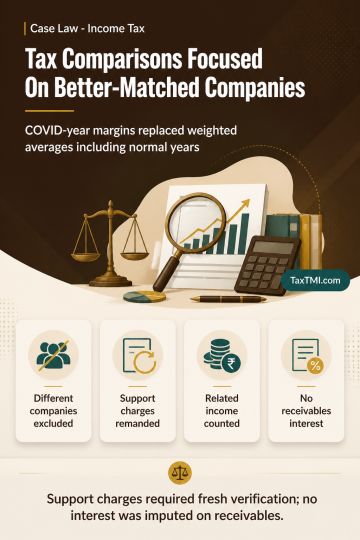
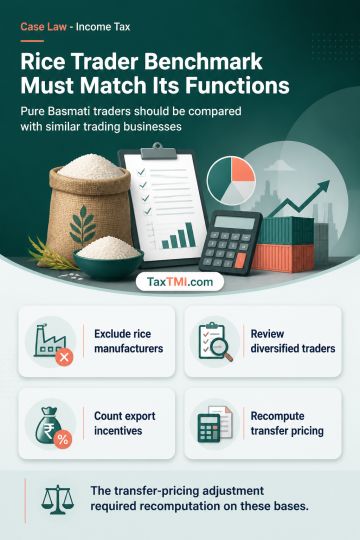
TNMM functional comparability requires excluding rice manufacturers from a pure Basmati rice trader's benchmark and recognising operating export receipts.
Contents
Summary
Note
Bookmark
Share
✓ Copied successfully !
Print
Print Options
For full text, please login
Login to TaxTMI
Verification Pending
The Email Id has not been verified. Click on the link we have sent on
Under TNMM, a Basmati rice trader that only procures and exports rice to its associated enterprise should be benchmarked against entities with comparable trading functions, assets and risks. Diversified commodity trading and rice milling, processing or manufacturing companies were treated as functionally dissimilar and excluded; milling and processing, rather than non-Basmati dealings or profitability alone, determined exclusion. Segmental trading results of a diversified company required reconsideration where trading represented its predominant revenue. Cash discounts reducing rice purchase cost and export incentives from licence sales were treated as operating income, since their exclusion would distort the operating-profit comparison. The transfer-pricing adjustment required recomputation on these bases.
Under TNMM, a Basmati rice trader that only procures and exports rice to its associated enterprise should be benchmarked against entities with comparable trading functions, assets and risks. Diversified commodity trading and rice milling, processing or manufacturing companies were treated as functionally dissimilar and excluded; milling and processing, rather than non-Basmati dealings or profitability alone, determined exclusion. Segmental trading results of a diversified company required reconsideration where trading represented its predominant revenue. Cash discounts reducing rice purchase cost and export incentives from licence sales were treated as operating income, since their exclusion would distort the operating-profit comparison. The transfer-pricing adjustment required recomputation on these bases.
Note: It is a system-generated summary and is for quick reference only.
 TaxTMI
  TaxTMI
 of 4891