Charitable sports promotion: sponsorship receipts alone did not defeat registration where funds supported tournaments and player development activitie...
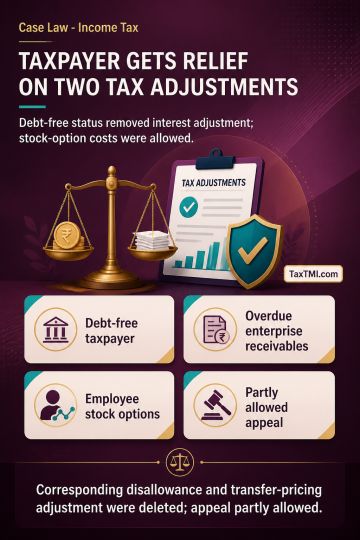
Overdue associated-enterprise receivables: debt-free status defeated notional-interest adjustment, while employee stock-option costs qualified as busi...
Retrospective assessment-limitation amendments validate final orders while contemporaneous segment data governs transfer-pricing comparability and tol...
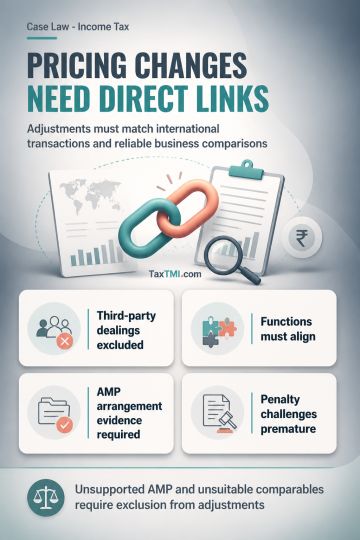
Transfer pricing adjustments must track international transactions, while unsupported AMP adjustments and unsuitable manufacturing comparables require...
Page of 4888
Press 'Enter' after typing page number.
1121 to 1140 of 97755 Results
❮
❯
❯❯
0 / 200
Expand Note
Add to Folder
No Folders have been created
+
Are you sure you want to delete "My most important" ?
Year-end estimated expenditure provisions, where invoices, precise liabilities and payees remain unascertained, do not amount to credit of an ascertainable sum to an identified payee under the mercantile system. Tax-deduction obligations therefore arise only when liabilities crystallise, with tax deducted where applicable upon receipt of invoices; reversal of the provisions in the succeeding year supports that treatment. A demand for tax-deduction default cannot be sustained merely on creation of such provisions. Further, where the same non-deduction has already led to disallowance of expenditure, it cannot also support a tax-deduction default demand; consequential interest fails with the principal demand.
Year-end estimated expenditure provisions, where invoices, precise liabilities and payees remain unascertained, do not amount to credit of an ascertainable sum to an identified payee under the mercantile system. Tax-deduction obligations therefore arise only when liabilities crystallise, with tax deducted where applicable upon receipt of invoices; reversal of the provisions in the succeeding year supports that treatment. A demand for tax-deduction default cannot be sustained merely on creation of such provisions. Further, where the same non-deduction has already led to disallowance of expenditure, it cannot also support a tax-deduction default demand; consequential interest fails with the principal demand.
Note: It is a system-generated summary and is for quick reference only.
 TaxTMI
  TaxTMI
 of 4888