Inverted-duty-structure refunds remain available for unchanged-rate apparel supplies despite trader status and require tax-period-specific computation...
Foundational assessment satisfaction is essential before initiating penalty for cash receipt of immovable-property sale consideration under section 27...
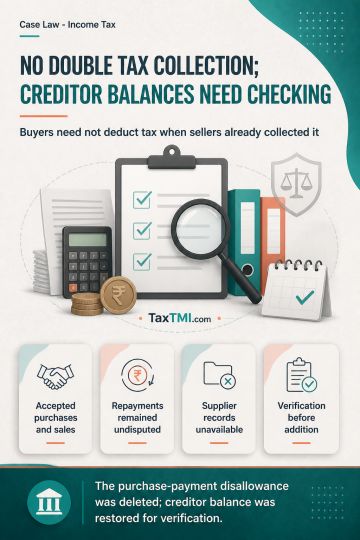
Tax collection at source on purchases removes duplicate withholding obligation, while trade-creditor evidence requires verification before unexplained...
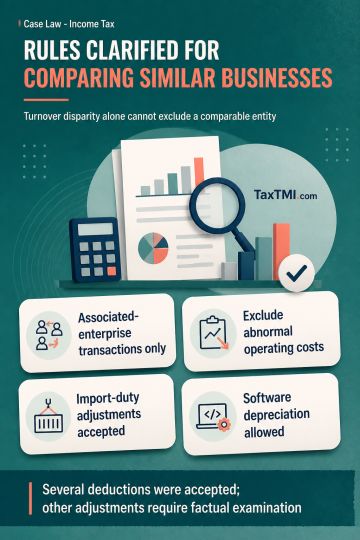
Transfer-pricing comparability requires material turnover effects; adjustments must cover only associated-enterprise transactions and exclude abnormal...
Page of 4891
Press 'Enter' after typing page number.
1001 to 1020 of 97820 Results
❮
❯
❯❯
0 / 200
Expand Note
Add to Folder
No Folders have been created
+
Are you sure you want to delete "My most important" ?
Year-end estimated expenditure provisions, where invoices, precise liabilities and payees remain unascertained, do not amount to credit of an ascertainable sum to an identified payee under the mercantile system. Tax-deduction obligations therefore arise only when liabilities crystallise, with tax deducted where applicable upon receipt of invoices; reversal of the provisions in the succeeding year supports that treatment. A demand for tax-deduction default cannot be sustained merely on creation of such provisions. Further, where the same non-deduction has already led to disallowance of expenditure, it cannot also support a tax-deduction default demand; consequential interest fails with the principal demand.
Year-end estimated expenditure provisions, where invoices, precise liabilities and payees remain unascertained, do not amount to credit of an ascertainable sum to an identified payee under the mercantile system. Tax-deduction obligations therefore arise only when liabilities crystallise, with tax deducted where applicable upon receipt of invoices; reversal of the provisions in the succeeding year supports that treatment. A demand for tax-deduction default cannot be sustained merely on creation of such provisions. Further, where the same non-deduction has already led to disallowance of expenditure, it cannot also support a tax-deduction default demand; consequential interest fails with the principal demand.
Note: It is a system-generated summary and is for quick reference only.
 TaxTMI
  TaxTMI
 of 4891