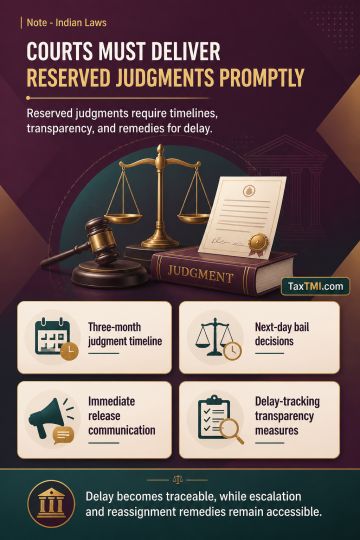
Timely pronouncement of reserved judgments requires defined timelines, transparency measures, and remedial pathways to protect liberty and effective j...
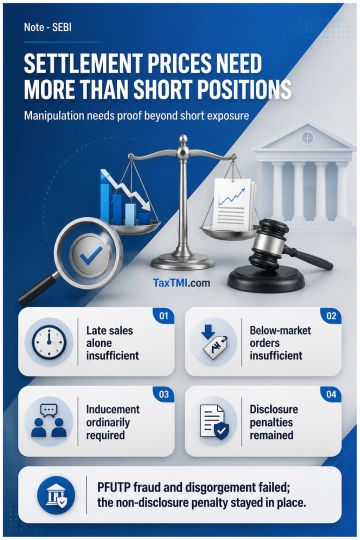
Settlement-price depression requires proof of manipulation, not merely short exposure, late selling, or below-market orders, preserving disclosure pen...
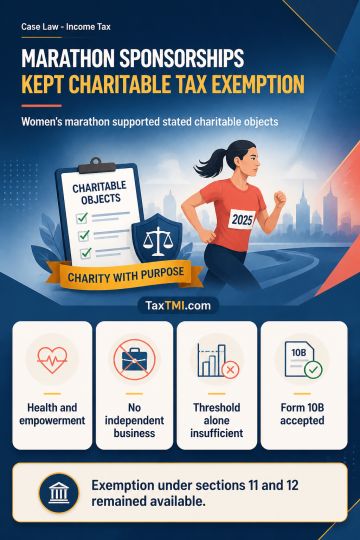
Charitable purpose is not defeated where sponsorship receipts from a women's marathon have a real and proximate nexus with objects of women's health, fitness, awareness and empowerment. The proviso to section 2(15) requires proof that the recipient's activity intrinsically operates as trade, commerce or business; sponsors' advertising treatment, receipt magnitude or surplus alone is insufficient. The 20% receipts formulation did not apply for the relevant assessment year, and exceeding the applicable monetary threshold could not replace that proof. Consequently, section 13(8) could not deny exemption under sections 11 and 12. Form No. 10B furnished during assessment cured an erroneous original exemption form where audit was completed before return filing and eligibility was examined on merits; the lapse was procedural.
Charitable purpose is not defeated where sponsorship receipts from a women's marathon have a real and proximate nexus with objects of women's health, fitness, awareness and empowerment. The proviso to section 2(15) requires proof that the recipient's activity intrinsically operates as trade, commerce or business; sponsors' advertising treatment, receipt magnitude or surplus alone is insufficient. The 20% receipts formulation did not apply for the relevant assessment year, and exceeding the applicable monetary threshold could not replace that proof. Consequently, section 13(8) could not deny exemption under sections 11 and 12. Form No. 10B furnished during assessment cured an erroneous original exemption form where audit was completed before return filing and eligibility was examined on merits; the lapse was procedural.
Note: It is a system-generated summary and is for quick reference only.
 TaxTMI
  TaxTMI
 of 4897