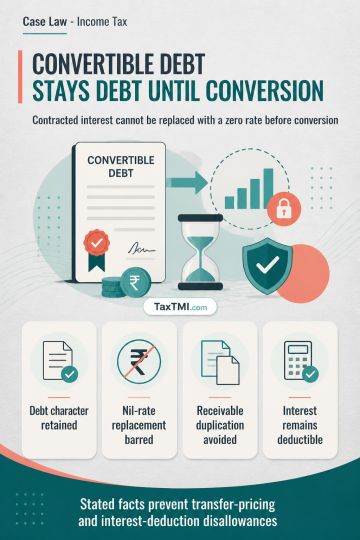
Compulsorily convertible debentures remain debt before conversion, preventing transfer-pricing and interest-deduction disallowances on the stated fact...
Stock-in-trade transfer taxability follows possession and consideration, not later conveyance registration, limiting deemed-value provisions to the ac...
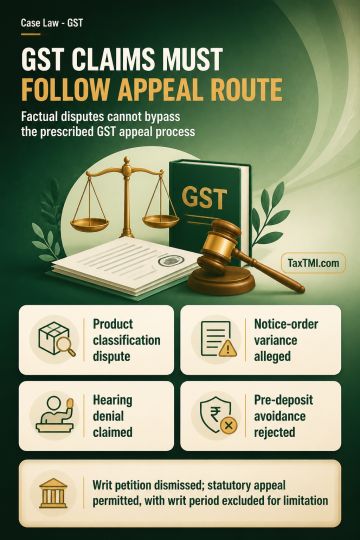
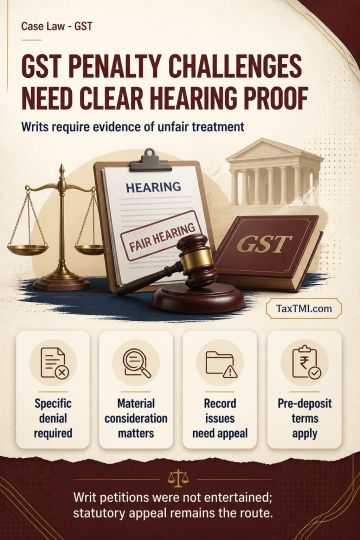
Alternative statutory remedy under GST bars writ challenge where classification, notice variance, and hearing disputes require factual appellate revie...
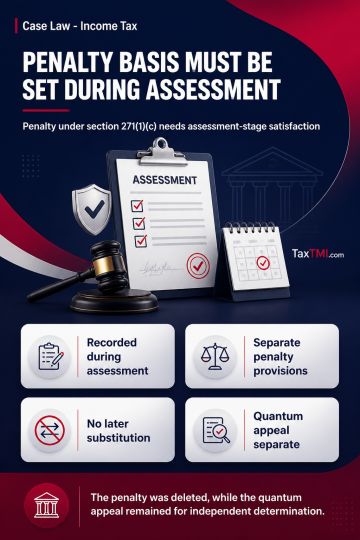
Penalty notices under section 271(1)(c) must clearly identify whether the charge concerns concealment of income or furnishing inaccurate particulars. The two limbs are independent and may require different explanations and treatment; therefore, a notice retaining both alternatives without specifying the applicable limb denies the assessee a proper opportunity to defend. Recording satisfaction to initiate penalty proceedings does not cure this defect. Applying this principle, the High Court treated the defective notice as invalid, upheld deletion of the penalty, and dismissed the revenue's appeal.
Penalty notices under section 271(1)(c) must clearly identify whether the charge concerns concealment of income or furnishing inaccurate particulars. The two limbs are independent and may require different explanations and treatment; therefore, a notice retaining both alternatives without specifying the applicable limb denies the assessee a proper opportunity to defend. Recording satisfaction to initiate penalty proceedings does not cure this defect. Applying this principle, the High Court treated the defective notice as invalid, upheld deletion of the penalty, and dismissed the revenue's appeal.
Note: It is a system-generated summary and is for quick reference only.
 TaxTMI
  TaxTMI
 of 4888