Duplicate PAN allocation requires record verification and deactivation reasons before assessment-related transactions can be attributed to an assessee...
Faceless assessment safeguards require requested personal hearings and adequate final show-cause response time, failing which reassessment is required...
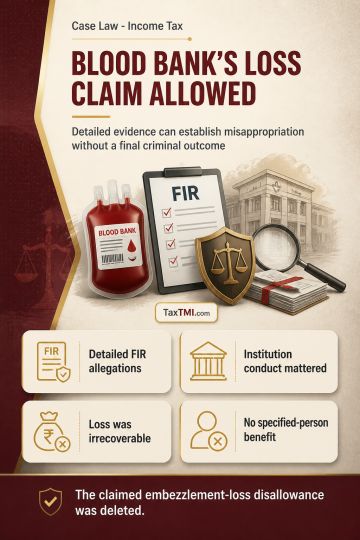
Embezzlement losses in charitable institutions remain allowable when misappropriation is established, irrecoverable, and not a specified-person benefi...
National long-distance undertaking status supports deduction where separately licensed infrastructure, resources, revenue, and expenditure establish c...
Agency reimbursement income follows contractual deposit-liability computation, while pending deposit collections do not constitute deemed-dividend loa...
Importers using transferable duty credit scrips through authorised customs clearance agents remain responsible for acts performed within the agent's authority when they retain the resulting duty benefit. Bona fide purchaser protection requires good faith and reasonable verification of a scrip's genuineness, validity and available credit; caveat emptor places that due-diligence burden on the importer. Incorrect Bill of Entry declarations and failure to investigate irregular clearance arrangements undermine that protection. Natural justice requires demonstrable prejudice: non-production of original scrips or denial of cross-examination does not invalidate proceedings where independent entitlement, transaction and investigation evidence establishes the facts. Fraud-related short-levy penalties may apply despite no personal execution of EDI manipulation, but separate overlapping penalties are mutually exclusive.
Importers using transferable duty credit scrips through authorised customs clearance agents remain responsible for acts performed within the agent's authority when they retain the resulting duty benefit. Bona fide purchaser protection requires good faith and reasonable verification of a scrip's genuineness, validity and available credit; caveat emptor places that due-diligence burden on the importer. Incorrect Bill of Entry declarations and failure to investigate irregular clearance arrangements undermine that protection. Natural justice requires demonstrable prejudice: non-production of original scrips or denial of cross-examination does not invalidate proceedings where independent entitlement, transaction and investigation evidence establishes the facts. Fraud-related short-levy penalties may apply despite no personal execution of EDI manipulation, but separate overlapping penalties are mutually exclusive.
Note: It is a system-generated summary and is for quick reference only.
 TaxTMI
  TaxTMI
 of 4886