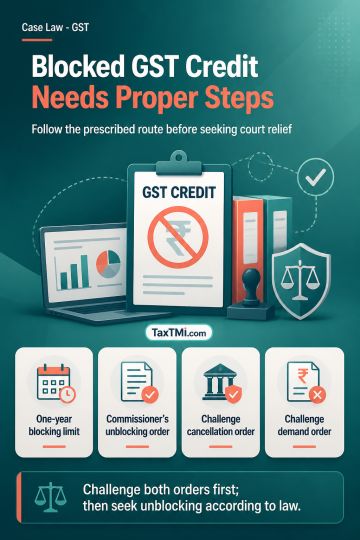
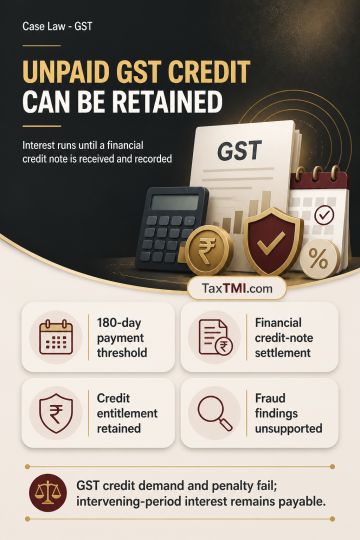
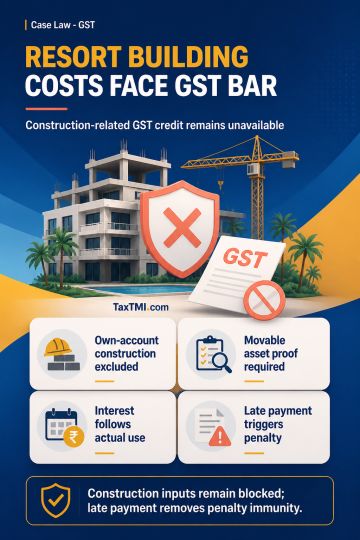
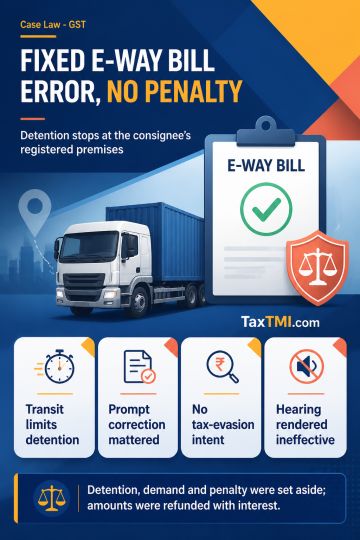
Blocked input tax credit for resort construction remains unavailable; interest follows actual utilisation, while delayed payment attracts statutory pe...
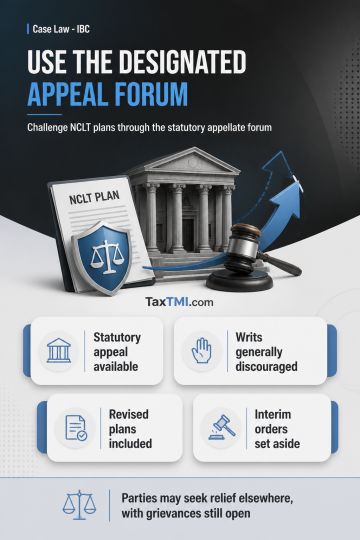
Statutory appellate remedy before the National Company Law Appellate Tribunal must ordinarily be pursued against NCLT orders, including orders approving revised resolution plans under the insolvency process. Writ jurisdiction should not be exercised where that effective appellate remedy is available. The Supreme Court set aside interim orders that had entertained writ applications challenging an NCLT order, while leaving the parties free to seek relief before the appropriate forum and keeping the merits of their grievances open.
Statutory appellate remedy before the National Company Law Appellate Tribunal must ordinarily be pursued against NCLT orders, including orders approving revised resolution plans under the insolvency process. Writ jurisdiction should not be exercised where that effective appellate remedy is available. The Supreme Court set aside interim orders that had entertained writ applications challenging an NCLT order, while leaving the parties free to seek relief before the appropriate forum and keeping the merits of their grievances open.
Note: It is a system-generated summary and is for quick reference only.
 TaxTMI
  TaxTMI
 of 4894