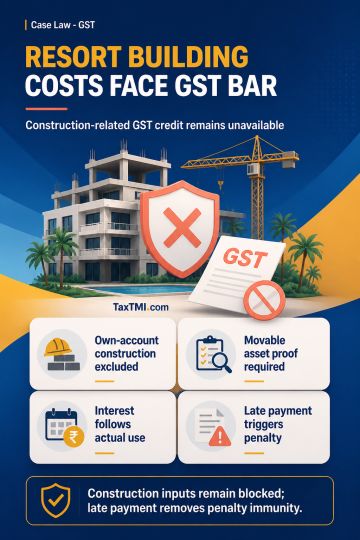
Blocked input tax credit for resort construction remains unavailable; interest follows actual utilisation, while delayed payment attracts statutory pe...
Duplicate PAN allocation requires record verification and deactivation reasons before assessment-related transactions can be attributed to an assessee...
Faceless assessment safeguards require requested personal hearings and adequate final show-cause response time, failing which reassessment is required...
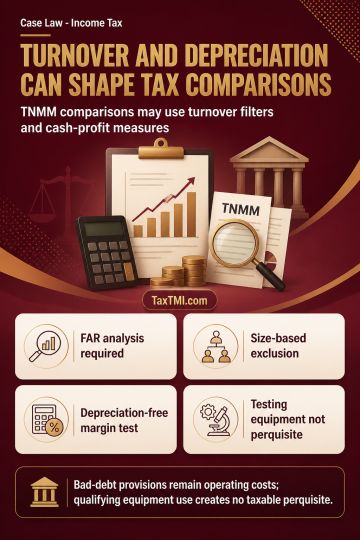
Transfer-pricing method selection between the Comparable Uncontrolled Price method and the Transactional Net Margin Method is primarily a fact-based benchmarking issue. The Tribunal's acceptance of TNMM as the most appropriate method was treated as sustainable where it was not perverse or contrary to the record. Mere disagreement over the appropriate method does not create a substantial question of law under section 260A unless the selected method contravenes prescribed rules. Differences between associated-enterprise and non-associated-enterprise transactions were also considered within the benchmarking analysis. The tax appeals were dismissed because the transfer-pricing questions raised no substantial question of law.
Transfer-pricing method selection between the Comparable Uncontrolled Price method and the Transactional Net Margin Method is primarily a fact-based benchmarking issue. The Tribunal's acceptance of TNMM as the most appropriate method was treated as sustainable where it was not perverse or contrary to the record. Mere disagreement over the appropriate method does not create a substantial question of law under section 260A unless the selected method contravenes prescribed rules. Differences between associated-enterprise and non-associated-enterprise transactions were also considered within the benchmarking analysis. The tax appeals were dismissed because the transfer-pricing questions raised no substantial question of law.
Note: It is a system-generated summary and is for quick reference only.
 TaxTMI
  TaxTMI
 of 4888