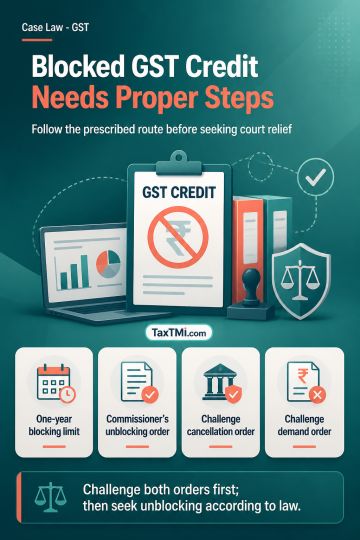
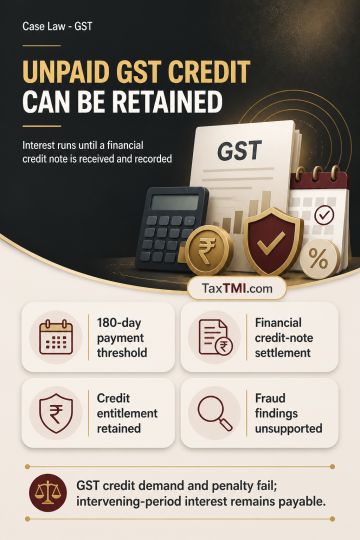
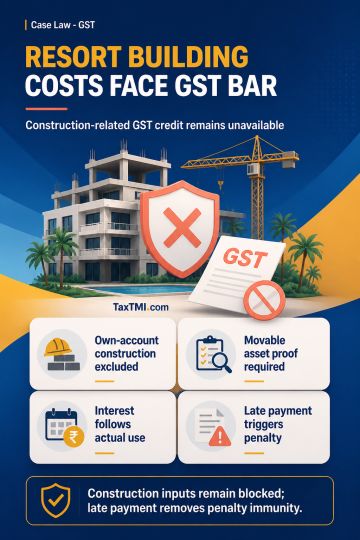
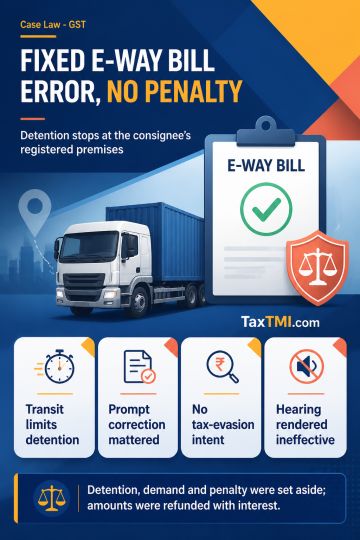
Blocked input tax credit for resort construction remains unavailable; interest follows actual utilisation, while delayed payment attracts statutory pe...
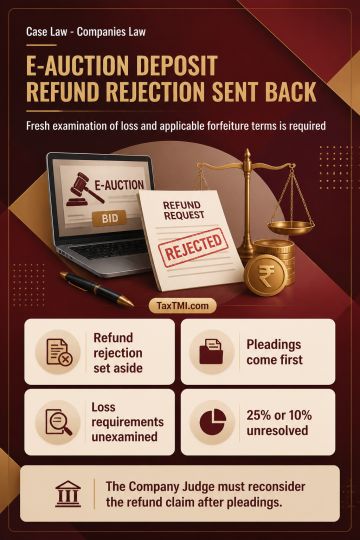
Forfeiture of earnest money in an e-auction required fresh consideration under Section 74 of the Indian Contract Act because the statutory requirements governing contractual forfeiture, including the necessity and quantum of loss, had not been raised or examined. The applicable e-auction terms also required determination of whether the forfeitable amount was 25% or 10% of the successful bid. The High Court set aside the rejection of the refund claim and remitted that issue to the Company Judge after completion of pleadings, leaving the merits of forfeiture open.
Forfeiture of earnest money in an e-auction required fresh consideration under Section 74 of the Indian Contract Act because the statutory requirements governing contractual forfeiture, including the necessity and quantum of loss, had not been raised or examined. The applicable e-auction terms also required determination of whether the forfeitable amount was 25% or 10% of the successful bid. The High Court set aside the rejection of the refund claim and remitted that issue to the Company Judge after completion of pleadings, leaving the merits of forfeiture open.
Note: It is a system-generated summary and is for quick reference only.
 TaxTMI
  TaxTMI
 of 4896