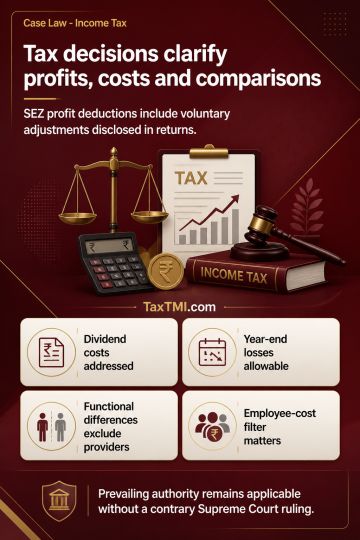
SEZ-unit profit deduction covers voluntary transfer-pricing adjustments, while exempt-income costs, foreign-exchange loss and ITeS comparables are exa...
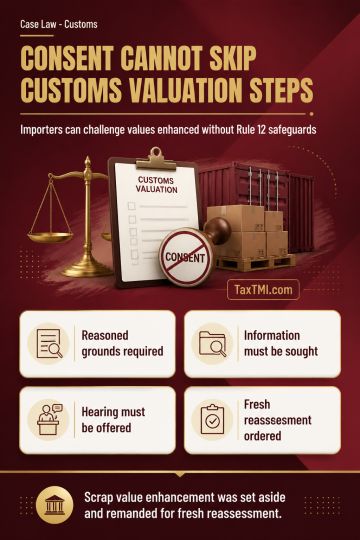
Customs valuation rules require the proper officer, before rejecting a declared transaction value, to form reasonable and cogent grounds for doubt, seek necessary information, disclose those grounds when requested, and provide a hearing under Rule 12. An importer's written consent to reassessment may dispense with a speaking order under Section 17(5), but does not make the enhanced value the declared transaction value, waive mandatory valuation procedures, or prevent challenge to final assessment. Enhancement of imported scrap values solely on consent was therefore set aside and remanded for fresh reassessment after statutory compliance and observance of natural justice.
Customs valuation rules require the proper officer, before rejecting a declared transaction value, to form reasonable and cogent grounds for doubt, seek necessary information, disclose those grounds when requested, and provide a hearing under Rule 12. An importer's written consent to reassessment may dispense with a speaking order under Section 17(5), but does not make the enhanced value the declared transaction value, waive mandatory valuation procedures, or prevent challenge to final assessment. Enhancement of imported scrap values solely on consent was therefore set aside and remanded for fresh reassessment after statutory compliance and observance of natural justice.
Note: It is a system-generated summary and is for quick reference only.
 TaxTMI
  TaxTMI
 of 4891