Transfer-pricing aggregation of distinct support-service and subcontract transactions was rejected, while debt-free receivables attracted no notional ...
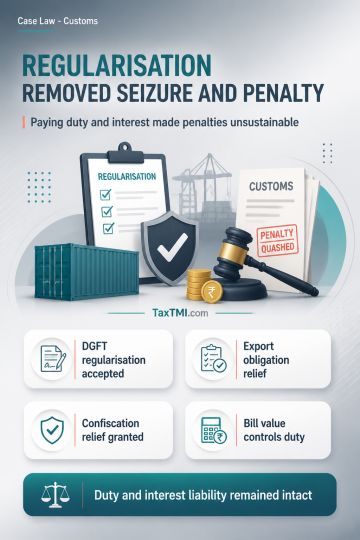
Customs exemptions cover photovoltaic assembly machinery and PVF backsheets, while fully declared cleared imports may avoid confiscation and penalties...
Specific tariff classification for LCD devices overrides treatment as electricity-meter parts, defeating differential duty, extended limitation, and p...
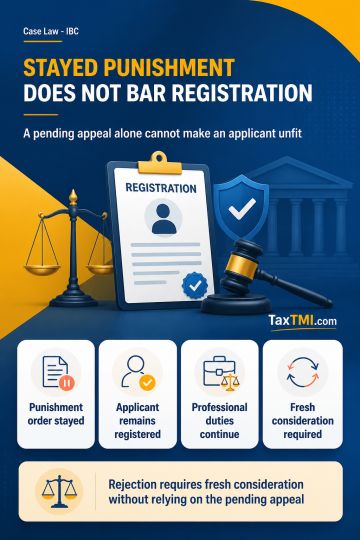
Stayed disciplinary punishment does not establish unfitness for insolvency professional registration; reconsideration must disregard mere pendency of ...
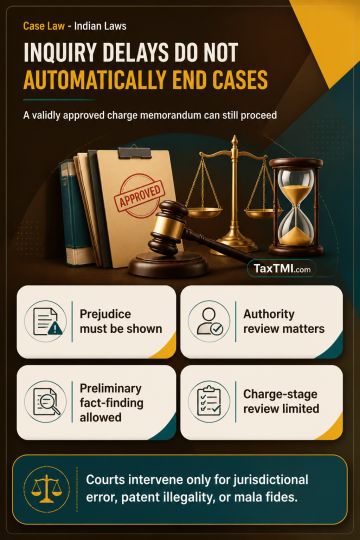
Rule 14(24) of the CCS (CCA) Rules does not automatically invalidate disciplinary proceedings merely because an inquiry exceeds the prescribed period without a written extension. Its time prescription is directory because it specifies no abatement or invalidation consequence; intervention requires inordinate unexplained delay, demonstrable prejudice, mala fides, or oppressive proceedings. Deferred promotion during pending proceedings alone is not legal prejudice. Approval of a charge memorandum is valid where the competent disciplinary authority considered the proposal, vigilance advice and relevant records; unsupported allegations of mechanical approval are insufficient. Preliminary fact-finding during deputation is permissible, and judicial review at the charge stage remains limited to jurisdictional error, patent illegality, mala fides, or fundamental statutory violation.
Rule 14(24) of the CCS (CCA) Rules does not automatically invalidate disciplinary proceedings merely because an inquiry exceeds the prescribed period without a written extension. Its time prescription is directory because it specifies no abatement or invalidation consequence; intervention requires inordinate unexplained delay, demonstrable prejudice, mala fides, or oppressive proceedings. Deferred promotion during pending proceedings alone is not legal prejudice. Approval of a charge memorandum is valid where the competent disciplinary authority considered the proposal, vigilance advice and relevant records; unsupported allegations of mechanical approval are insufficient. Preliminary fact-finding during deputation is permissible, and judicial review at the charge stage remains limited to jurisdictional error, patent illegality, mala fides, or fundamental statutory violation.
Note: It is a system-generated summary and is for quick reference only.
 TaxTMI
  TaxTMI
 of 4891