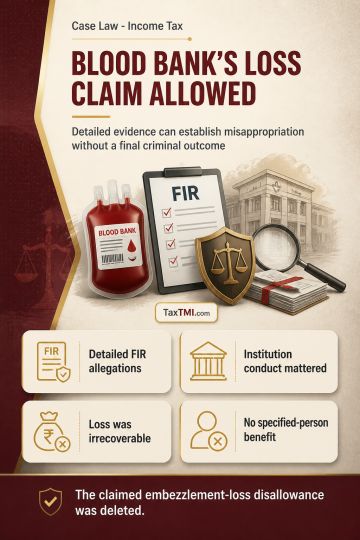
Embezzlement losses in charitable institutions remain allowable when misappropriation is established, irrecoverable, and not a specified-person benefi...
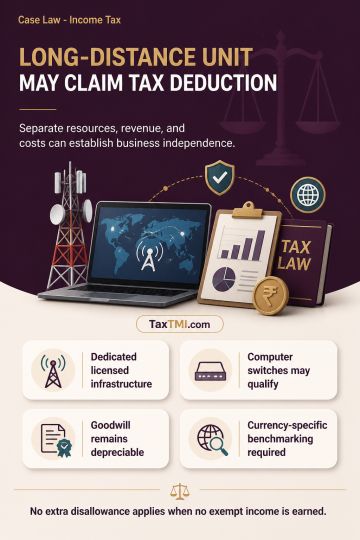
National long-distance undertaking status supports deduction where separately licensed infrastructure, resources, revenue, and expenditure establish c...
Agency reimbursement income follows contractual deposit-liability computation, while pending deposit collections do not constitute deemed-dividend loa...
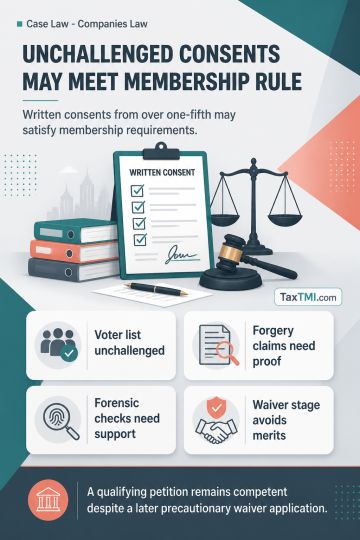
Membership-consent thresholds for oppression petitions are satisfied by unchallenged voter-list consents, while unsupported forgery claims require pro...
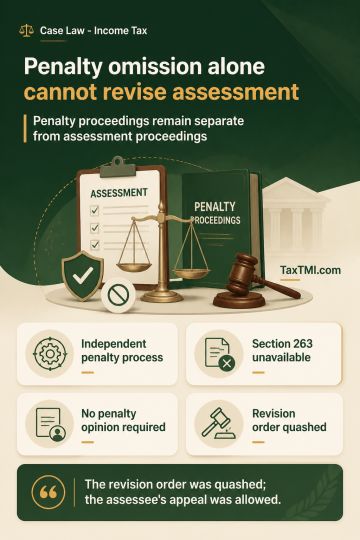
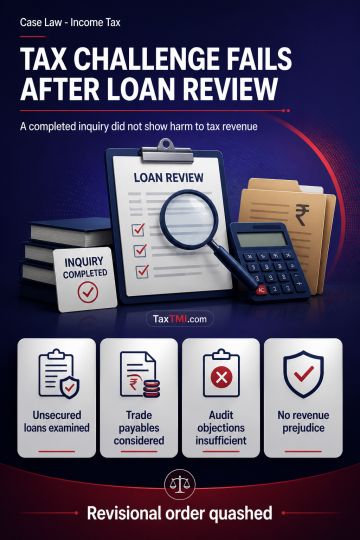
Section 263 revision requires the assessment order to be both erroneous and prejudicial to the interests of the Revenue. Where the Assessing Officer has called for and considered details on unsecured loans and trade payables, revision cannot rest merely on audit objections or an assumption that further inquiry would produce an addition under section 68. Explanation 2 creates a deeming framework for insufficient inquiry but does not remove the twin statutory requirements. In the stated circumstances, the assessment was made after inquiry, no revenue prejudice was identified, and the revisional order was quashed.
Section 263 revision requires the assessment order to be both erroneous and prejudicial to the interests of the Revenue. Where the Assessing Officer has called for and considered details on unsecured loans and trade payables, revision cannot rest merely on audit objections or an assumption that further inquiry would produce an addition under section 68. Explanation 2 creates a deeming framework for insufficient inquiry but does not remove the twin statutory requirements. In the stated circumstances, the assessment was made after inquiry, no revenue prejudice was identified, and the revisional order was quashed.
Note: It is a system-generated summary and is for quick reference only.
 TaxTMI
  TaxTMI
 of 4881