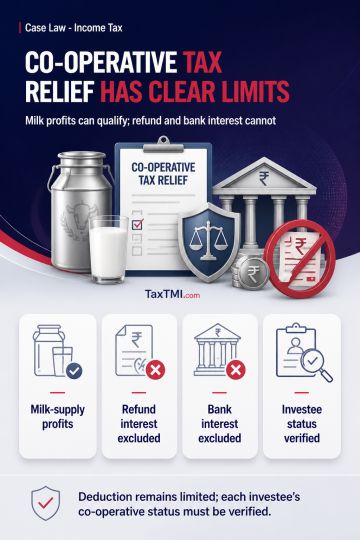
Co-operative deduction eligibility excludes refund and commercial-bank interest, while qualifying co-operative investments require entity-wise verific...
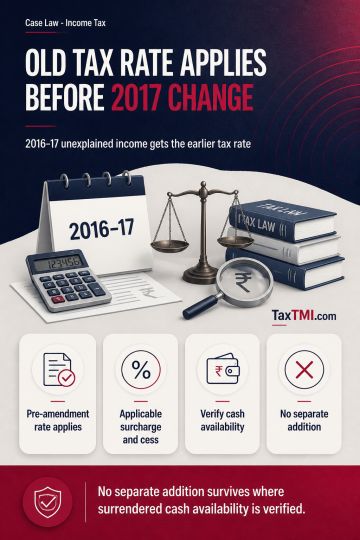
Enhanced tax rate on surrendered unexplained income applies prospectively, while cash-deposit telescoping requires verification of available surrender...
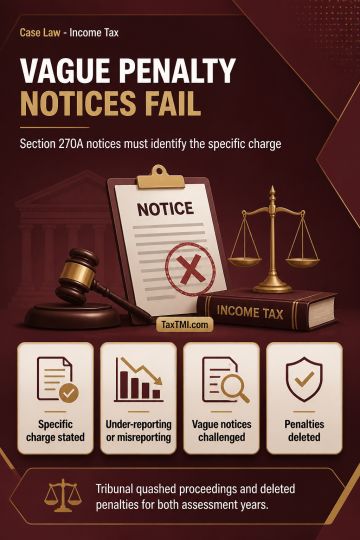
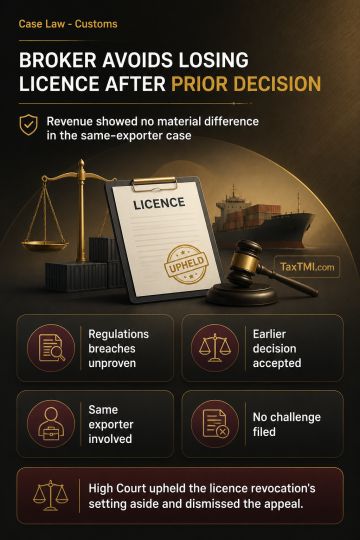
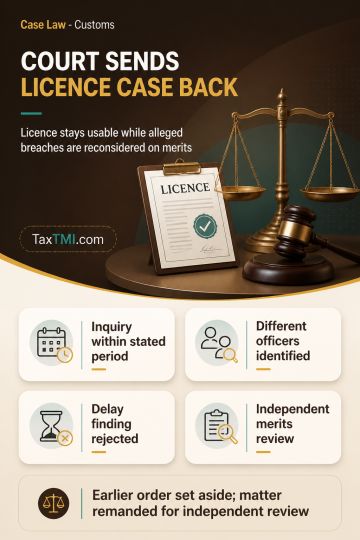
Customs Broker licence proceedings require accurate procedural facts before delay or natural-justice findings can justify setting aside regulatory act...
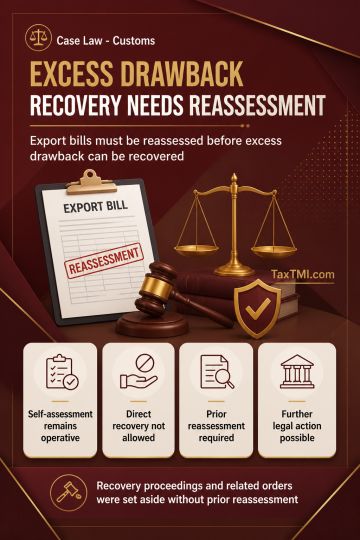
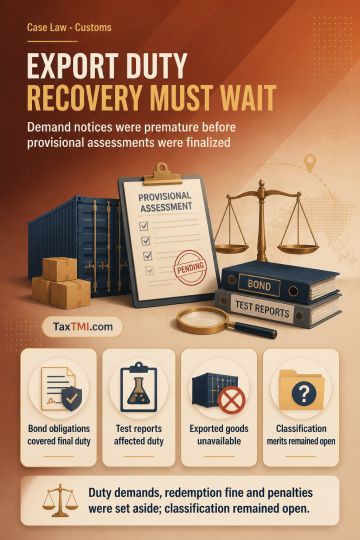
Provisional assessment finalisation must precede export duty recovery, while redemption fine fails for goods already exported and unavailable for conf...
Page of 4896
Press 'Enter' after typing page number.
1921 to 1940 of 97907 Results
❮
❯
❯❯
0 / 200
Expand Note
Add to Folder
No Folders have been created
+
Are you sure you want to delete "My most important" ?
Commission payments to agents were allowable as business...
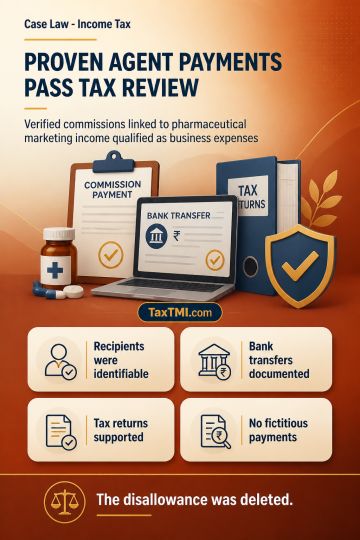
Commission expenditure linked to pharmaceutical marketing income qualifies as business deduction when recipient identity, genuineness and business purpose are established.
Contents
Summary
Note
Bookmark
Share
✓ Copied successfully !
Print
Print Options
For full text, please login
Login to TaxTMI
Verification Pending
The Email Id has not been verified. Click on the link we have sent on
Commission payments to agents were allowable as business expenditure where they were intrinsically linked to commission income earned from pharmaceutical companies for facilitating marketing and sales. The disallowance based on an assumption that payments related to direct sales to Government hospitals lacked factual support. Recipient details, tax deduction at source, banking-channel payments and recipients' income-tax returns established the identity of recipients, genuineness of payments and business purpose. With no evidence of fictitious payments, non-existent recipients or diversion back to the assessee, the expenditure satisfied the wholly and exclusively business-purpose test and the disallowance was deleted.
Commission payments to agents were allowable as business expenditure where they were intrinsically linked to commission income earned from pharmaceutical companies for facilitating marketing and sales. The disallowance based on an assumption that payments related to direct sales to Government hospitals lacked factual support. Recipient details, tax deduction at source, banking-channel payments and recipients' income-tax returns established the identity of recipients, genuineness of payments and business purpose. With no evidence of fictitious payments, non-existent recipients or diversion back to the assessee, the expenditure satisfied the wholly and exclusively business-purpose test and the disallowance was deleted.
Note: It is a system-generated summary and is for quick reference only.
 TaxTMI
  TaxTMI
 of 4896