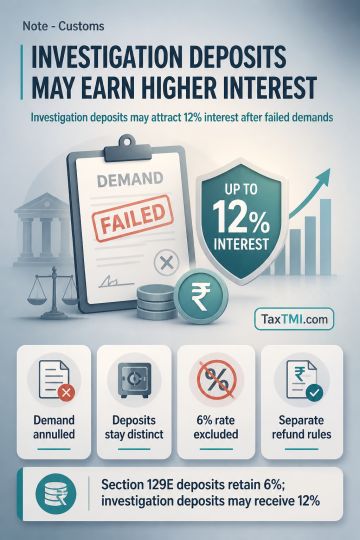
Investigation deposits refunded after failed customs demands fall outside the statutory appellate pre-deposit interest regime and may attract compensa...
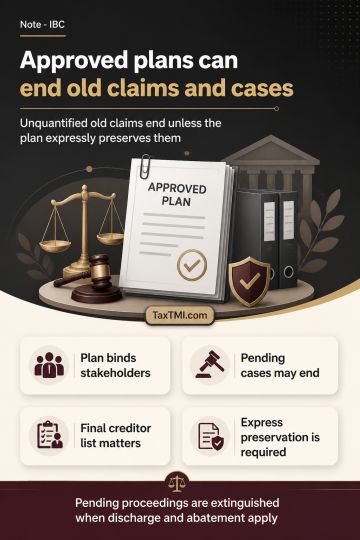
Resolution plan finality extinguishes unquantified operational-creditor claims and pending proceedings unless the approved plan expressly preserves th...
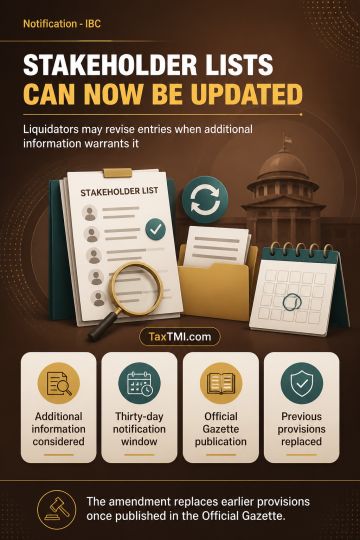
Stakeholder-list modification permits liquidators to update entries on new information, subject to notifying the Adjudicating Authority within prescri...
Commission payments to agents were allowable as business...
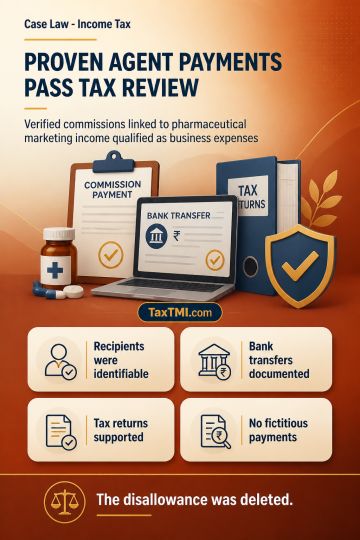
Commission expenditure linked to pharmaceutical marketing income qualifies as business deduction when recipient identity, genuineness and business purpose are established.
Contents
Summary
Note
Bookmark
Share
✓ Copied successfully !
Print
Print Options
For full text, please login
Login to TaxTMI
Verification Pending
The Email Id has not been verified. Click on the link we have sent on
Commission payments to agents were allowable as business expenditure where they were intrinsically linked to commission income earned from pharmaceutical companies for facilitating marketing and sales. The disallowance based on an assumption that payments related to direct sales to Government hospitals lacked factual support. Recipient details, tax deduction at source, banking-channel payments and recipients' income-tax returns established the identity of recipients, genuineness of payments and business purpose. With no evidence of fictitious payments, non-existent recipients or diversion back to the assessee, the expenditure satisfied the wholly and exclusively business-purpose test and the disallowance was deleted.
Commission payments to agents were allowable as business expenditure where they were intrinsically linked to commission income earned from pharmaceutical companies for facilitating marketing and sales. The disallowance based on an assumption that payments related to direct sales to Government hospitals lacked factual support. Recipient details, tax deduction at source, banking-channel payments and recipients' income-tax returns established the identity of recipients, genuineness of payments and business purpose. With no evidence of fictitious payments, non-existent recipients or diversion back to the assessee, the expenditure satisfied the wholly and exclusively business-purpose test and the disallowance was deleted.
Note: It is a system-generated summary and is for quick reference only.
 TaxTMI
  TaxTMI
 of 4894