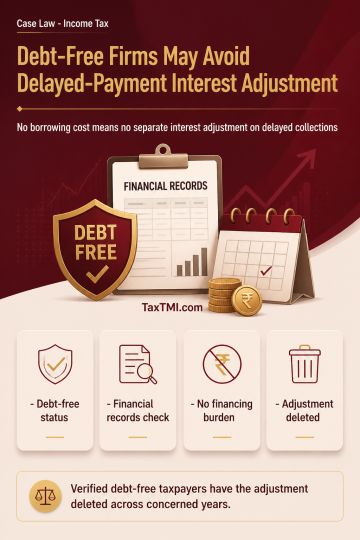
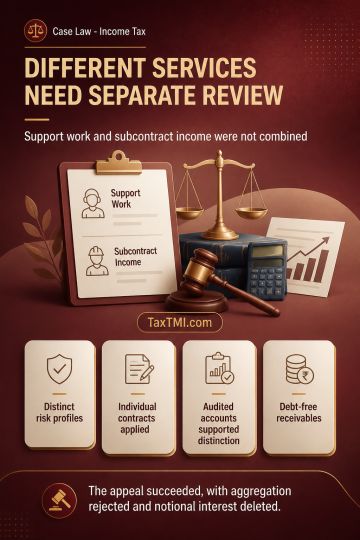
Transfer-pricing aggregation of distinct support-service and subcontract transactions was rejected, while debt-free receivables attracted no notional ...
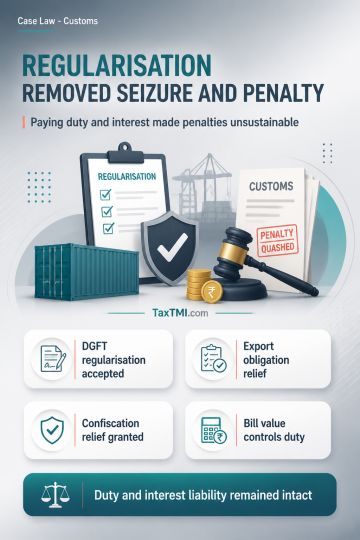
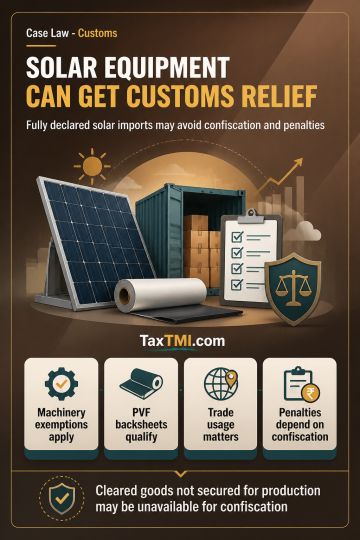
Customs exemptions cover photovoltaic assembly machinery and PVF backsheets, while fully declared cleared imports may avoid confiscation and penalties...
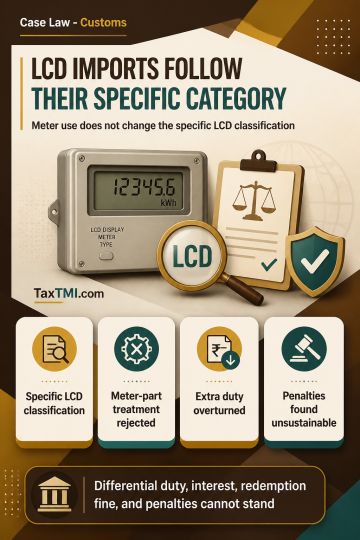
Specific tariff classification for LCD devices overrides treatment as electricity-meter parts, defeating differential duty, extended limitation, and p...
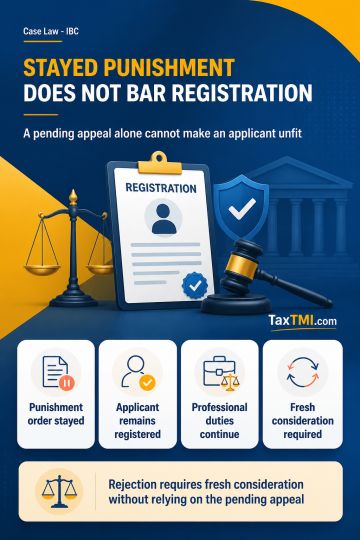
Stayed disciplinary punishment does not establish unfitness for insolvency professional registration; reconsideration must disregard mere pendency of ...
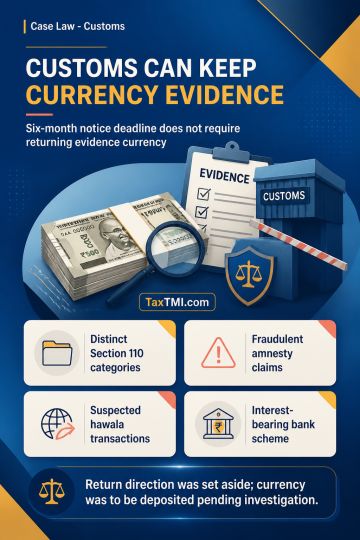
Section 110 distinguishes goods seized for confiscation from documents or things retained as useful or relevant to Customs Act proceedings. The six-month notice period applies to goods seized under Section 110(1), but not to currency treated as a "thing" under Section 110(3) when retained as evidence in an investigation into fraudulent amnesty claims, suspected hawala transactions, illegal gratification, or related offences. Currency is treated as goods where it is itself the subject of a customs violation, such as undeclared cross-border carriage. The return direction was set aside, and the currency was to be deposited in an interest-bearing nationalised-bank scheme pending investigation.
Section 110 distinguishes goods seized for confiscation from documents or things retained as useful or relevant to Customs Act proceedings. The six-month notice period applies to goods seized under Section 110(1), but not to currency treated as a "thing" under Section 110(3) when retained as evidence in an investigation into fraudulent amnesty claims, suspected hawala transactions, illegal gratification, or related offences. Currency is treated as goods where it is itself the subject of a customs violation, such as undeclared cross-border carriage. The return direction was set aside, and the currency was to be deposited in an interest-bearing nationalised-bank scheme pending investigation.
Note: It is a system-generated summary and is for quick reference only.
 TaxTMI
  TaxTMI
 of 4891