Transfer-pricing aggregation of distinct support-service and subcontract transactions was rejected, while debt-free receivables attracted no notional ...
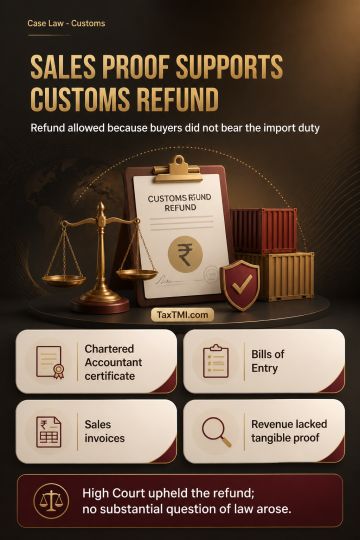
Unjust enrichment does not bar a customs-duty refund where evidence establishes that the duty incidence was not passed to buyers. A Chartered Accountant certificate, Bills of Entry and sales invoices showing bunker oil was sold below its import value supported non-recovery of even the import cost. Once that material was produced, Revenue needed tangible evidence that buyers bore the duty; recording duty as expenditure in the profit and loss account was insufficient. The High Court upheld the finding that the importer had not passed on the duty incidence, so the refund was properly allowed and no substantial question of law arose.
Unjust enrichment does not bar a customs-duty refund where evidence establishes that the duty incidence was not passed to buyers. A Chartered Accountant certificate, Bills of Entry and sales invoices showing bunker oil was sold below its import value supported non-recovery of even the import cost. Once that material was produced, Revenue needed tangible evidence that buyers bore the duty; recording duty as expenditure in the profit and loss account was insufficient. The High Court upheld the finding that the importer had not passed on the duty incidence, so the refund was properly allowed and no substantial question of law arose.
Note: It is a system-generated summary and is for quick reference only.
 TaxTMI
  TaxTMI
 of 4879