Customs-controlled cargo movement now includes GDL, subject to EXIM prioritisation, segregation, verification, reconciliation and enforcement safeguar...
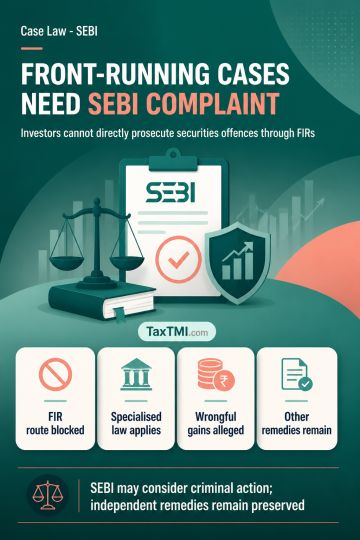
SEBI Act offences involving front running must be prosecuted through a complaint filed by SEBI before the competent court, because section 26 bars cognizance on an investor's FIR. Front running involves using non-public information about impending substantial securities transactions to obtain wrongful gains and falls within the specialised securities-market regime. That regime prevails over general penal law where the FIR's allegations essentially constitute the SEBI offence, preventing circumvention through ordinary criminal registration. The FIR was quashed in its existing form, while leaving SEBI free to consider criminal action under the SEBI Act and preserving any independent remedies or distinct IPC/BNS offences.
SEBI Act offences involving front running must be prosecuted through a complaint filed by SEBI before the competent court, because section 26 bars cognizance on an investor's FIR. Front running involves using non-public information about impending substantial securities transactions to obtain wrongful gains and falls within the specialised securities-market regime. That regime prevails over general penal law where the FIR's allegations essentially constitute the SEBI offence, preventing circumvention through ordinary criminal registration. The FIR was quashed in its existing form, while leaving SEBI free to consider criminal action under the SEBI Act and preserving any independent remedies or distinct IPC/BNS offences.
Note: It is a system-generated summary and is for quick reference only.
 TaxTMI
  TaxTMI
 of 4881