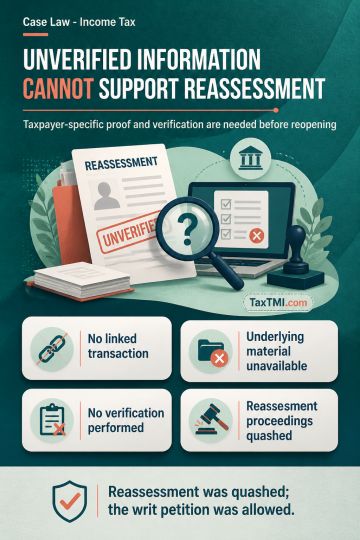
Unverified Insight Portal Information Cannot Justify Reassessment Without a Verified Taxpayer-Specific Income-Escape Nexus or Demonstrated Application...
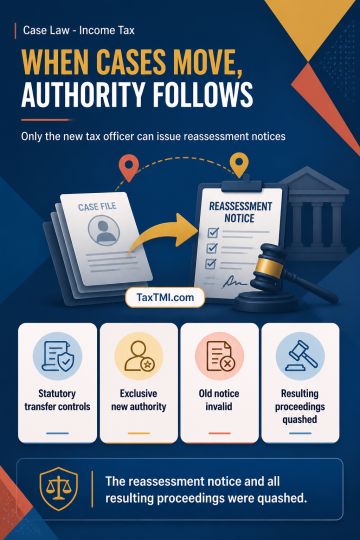
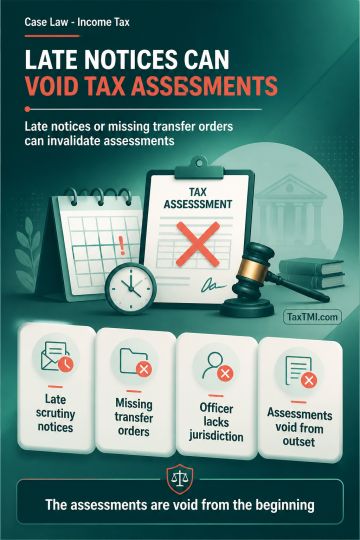
Assessing Officer jurisdiction after statutory transfer invalidates reassessment notices issued by transferor officers and nullifies resulting proceed...
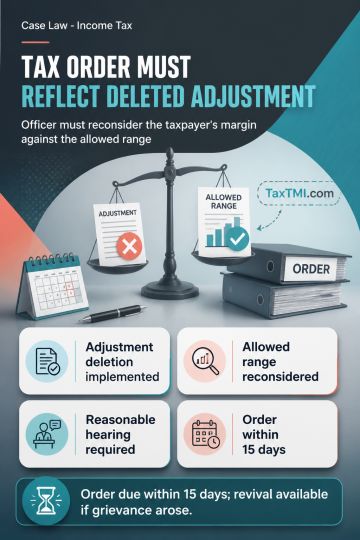
Consequential appeal-effect orders must implement rectification deleting working-capital adjustments and reconsider the resulting arm's-length range c...
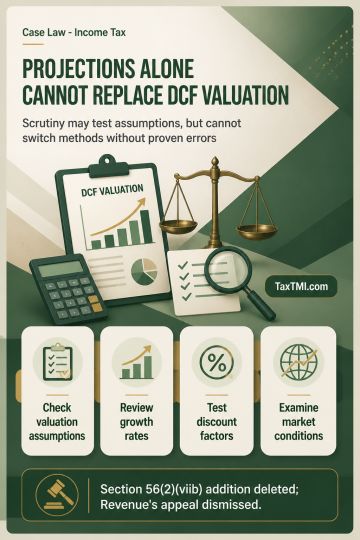
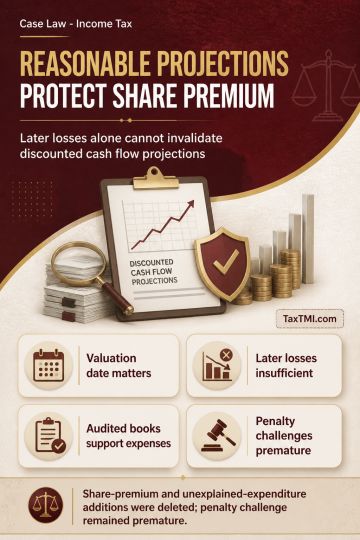
Discounted cash flow valuation protects share premium where projections are reasonable, while audited book expenses defeat unexplained-expenditure add...
Section 54 construction relief survives pre-transfer commencement when completion occurs within the statutory period, excluding ineligible spouse-owne...
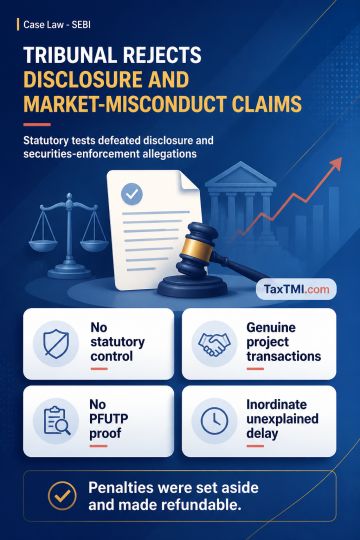
Statutory associate-company criteria governed whether the group company required consolidation and related-party disclosures. The Tribunal majority found no prescribed voting threshold, agreement, control, or participation in business decisions; accounting standards could supplement but not override the statutory definition. Consolidation and related-party disclosure contraventions therefore failed. The majority also found the real-estate bulk-sale memoranda and underlying projects genuine, with no proof that common personnel, funding arrangements, accounting differences, or weak finances established a sham scheme, market impact, unlawful gain, or PFUTP violation. Securities-enforcement proceedings were further initiated after inordinate, unexplained delay following completed transactions. The appeals succeeded, penalties were set aside and refundable; the Presiding Officer dissented.
Statutory associate-company criteria governed whether the group company required consolidation and related-party disclosures. The Tribunal majority found no prescribed voting threshold, agreement, control, or participation in business decisions; accounting standards could supplement but not override the statutory definition. Consolidation and related-party disclosure contraventions therefore failed. The majority also found the real-estate bulk-sale memoranda and underlying projects genuine, with no proof that common personnel, funding arrangements, accounting differences, or weak finances established a sham scheme, market impact, unlawful gain, or PFUTP violation. Securities-enforcement proceedings were further initiated after inordinate, unexplained delay following completed transactions. The appeals succeeded, penalties were set aside and refundable; the Presiding Officer dissented.
Note: It is a system-generated summary and is for quick reference only.
 TaxTMI
  TaxTMI
 of 4886