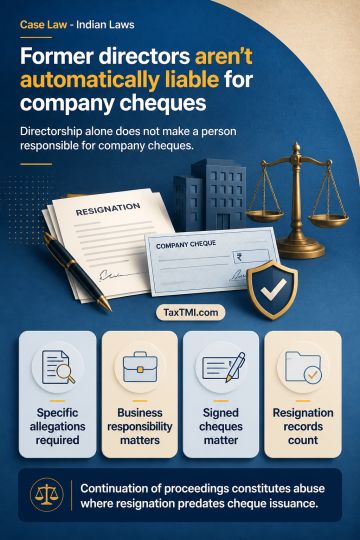
Section 141 of the Negotiable Instruments Act does not impose automatic vicarious liability on a director merely because of directorship. A cheque-dishonour complaint must specifically allege that the person was in charge of and responsible for the company's business when the offence occurred, or that it resulted from that person's consent, connivance or neglect. General allegations are inadequate, particularly where the person neither signed the cheques nor remained a director when they were issued and dishonoured. Statutory records establishing resignation before issuance of the cheques negate such liability, and continuation of proceedings in those circumstances constitutes abuse of process.
Section 141 of the Negotiable Instruments Act does not impose automatic vicarious liability on a director merely because of directorship. A cheque-dishonour complaint must specifically allege that the person was in charge of and responsible for the company's business when the offence occurred, or that it resulted from that person's consent, connivance or neglect. General allegations are inadequate, particularly where the person neither signed the cheques nor remained a director when they were issued and dishonoured. Statutory records establishing resignation before issuance of the cheques negate such liability, and continuation of proceedings in those circumstances constitutes abuse of process.
Note: It is a system-generated summary and is for quick reference only.
 TaxTMI
  TaxTMI
 of 4878