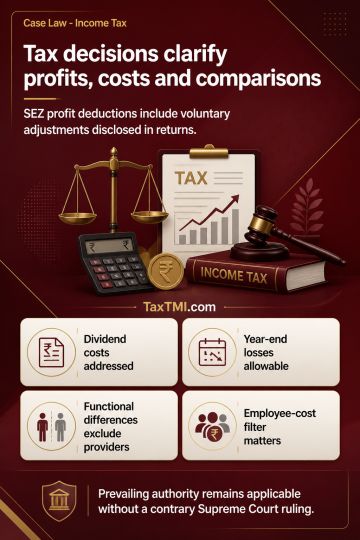
SEZ-unit profit deduction covers voluntary transfer-pricing adjustments, while exempt-income costs, foreign-exchange loss and ITeS comparables are exa...
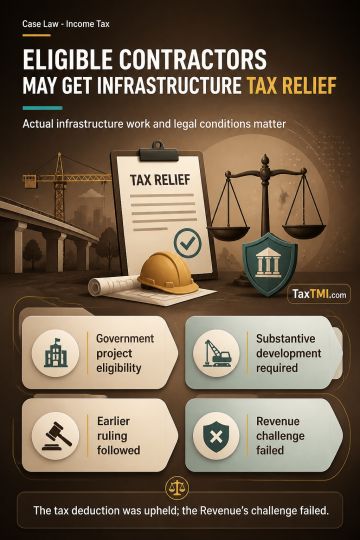
Infrastructure-development deduction remains available to EPC contractors when substantive statutory conditions outweigh contractor labels in agreemen...
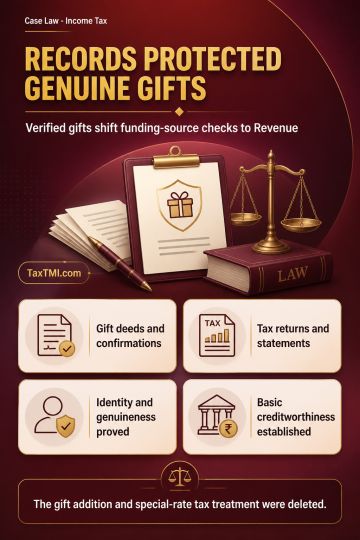
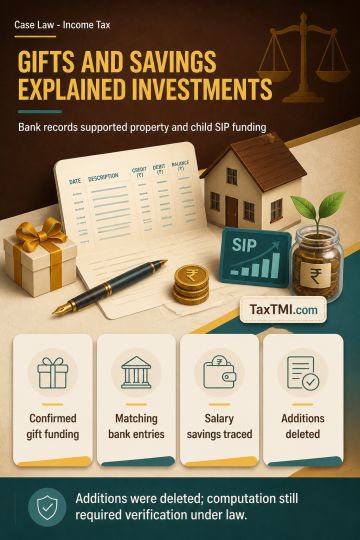
Explained Investment Sources: documented gifts and traceable salary savings supported deletion of additions for property and mutual-fund SIP investmen...
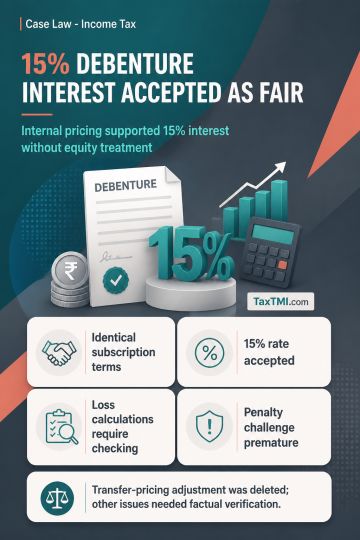
Internal comparable pricing supports arm's-length interest on compulsorily convertible debentures, preventing their recharacterisation as equity for t...
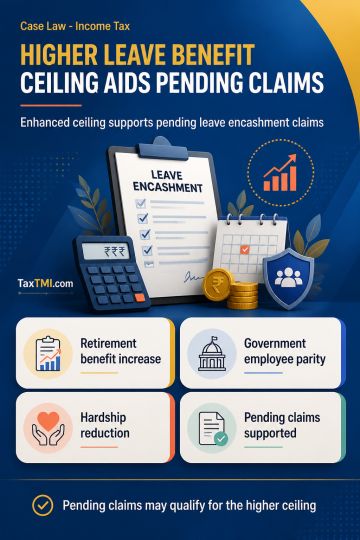
Leave encashment received on retirement by non-government employees under section 10(10AA)(ii) is discussed in relation to a subsequently enhanced exemption ceiling. The enhancement is characterised as a remedial and beneficial measure that rationalises an existing exemption, reduces disparity with government employees, and mitigates hardship. On that approach, the enhanced ceiling is treated as enlarging an existing benefit rather than creating a new exemption, supporting liberal application to pending claims despite no express retrospective provision. Restricting claims to the earlier ceiling could differentiate between similarly placed employees solely by retirement timing.
Leave encashment received on retirement by non-government employees under section 10(10AA)(ii) is discussed in relation to a subsequently enhanced exemption ceiling. The enhancement is characterised as a remedial and beneficial measure that rationalises an existing exemption, reduces disparity with government employees, and mitigates hardship. On that approach, the enhanced ceiling is treated as enlarging an existing benefit rather than creating a new exemption, supporting liberal application to pending claims despite no express retrospective provision. Restricting claims to the earlier ceiling could differentiate between similarly placed employees solely by retirement timing.
Note: It is a system-generated summary and is for quick reference only.
 TaxTMI
  TaxTMI
 of 4897