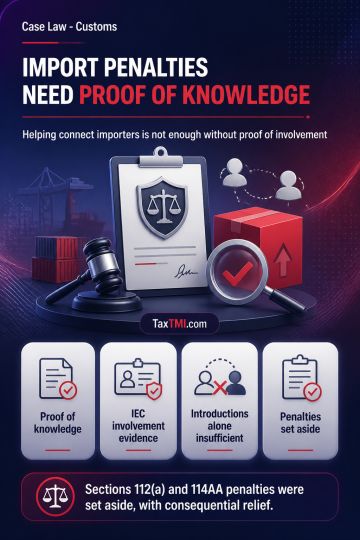
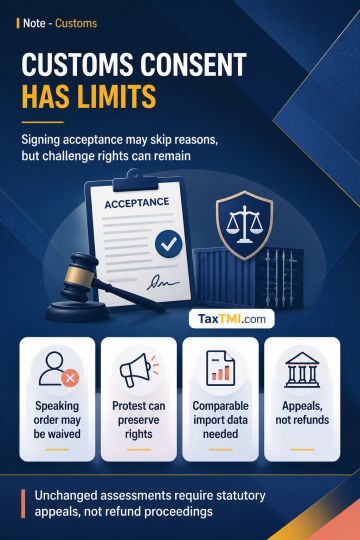
Customs transaction value rejection requires communicated reasonable doubt, while written reassessment acceptance preserves challenges to enhanced val...
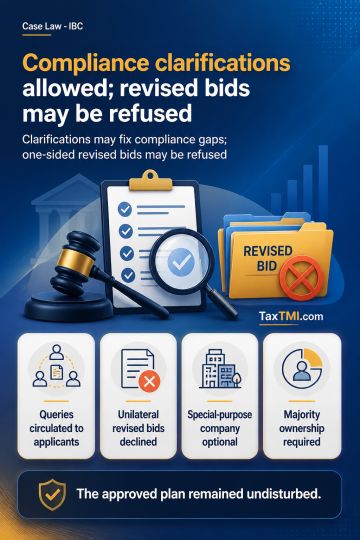
Challenge-mechanism compliance clarifications permitted, while unilateral revised resolution plans may be refused under creditors' commercial discreti...
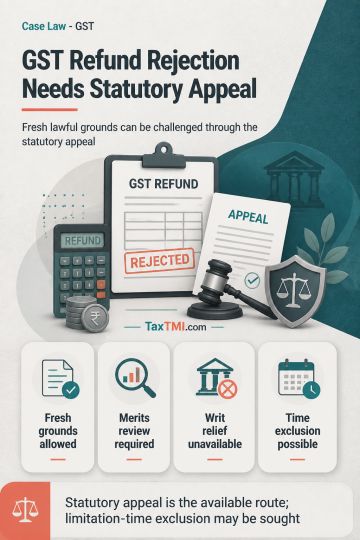
A consequential GST refund rejection following an appellate order may be challenged through the statutory appeal where the appellate order merely set aside the earlier rejection on previously considered grounds. The Proper Officer may examine refund entitlement afresh on other legally permissible grounds, provided the fresh reasons are distinct from those rejected in appeal. Questions concerning the appellate order's effect and the validity of the new rejection grounds require merits review in the statutory appellate process. Writ intervention is unavailable where the order is not prima facie non est or wholly without jurisdiction. The taxpayer may seek exclusion of the time spent in writ proceedings for limitation purposes.
A consequential GST refund rejection following an appellate order may be challenged through the statutory appeal where the appellate order merely set aside the earlier rejection on previously considered grounds. The Proper Officer may examine refund entitlement afresh on other legally permissible grounds, provided the fresh reasons are distinct from those rejected in appeal. Questions concerning the appellate order's effect and the validity of the new rejection grounds require merits review in the statutory appellate process. Writ intervention is unavailable where the order is not prima facie non est or wholly without jurisdiction. The taxpayer may seek exclusion of the time spent in writ proceedings for limitation purposes.
Note: It is a system-generated summary and is for quick reference only.
 TaxTMI
  TaxTMI
 of 4910