Automated airline software subscriptions without human intervention fail technical-services characterisation and do not make available underlying tech...
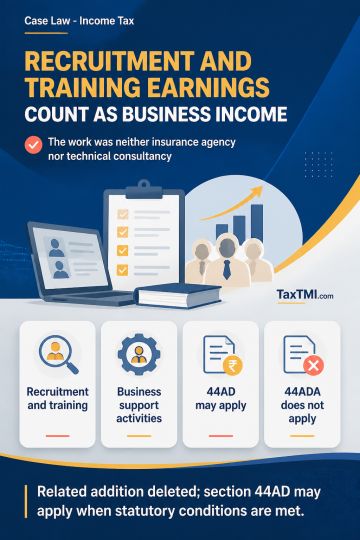
Business support recruitment and training receipts qualify for presumptive business taxation, not professional taxation under technical consultancy ru...
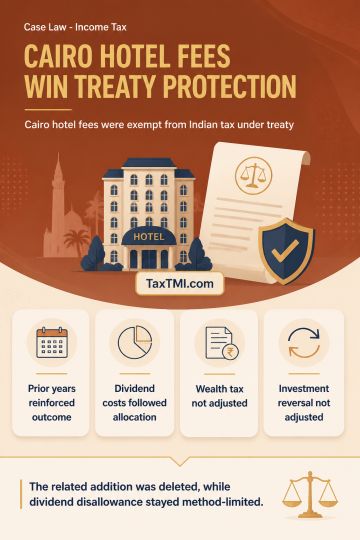
Treaty exemption for foreign permanent-establishment management fees prevailed, while dividend expense disallowance remained limited to an accepted al...
Centralised assessment transfers: participation after requesting centralisation can bar technical jurisdictional challenges, while assessment disputes...
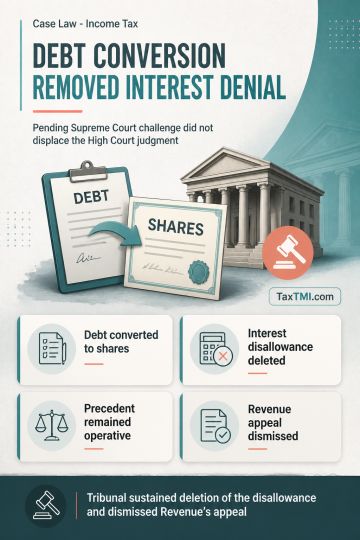
Binding precedent remains operative despite pending challenge, supporting deletion of interest disallowance when debt is converted into preference sha...
Separate assessment orders for different assessment years may be...
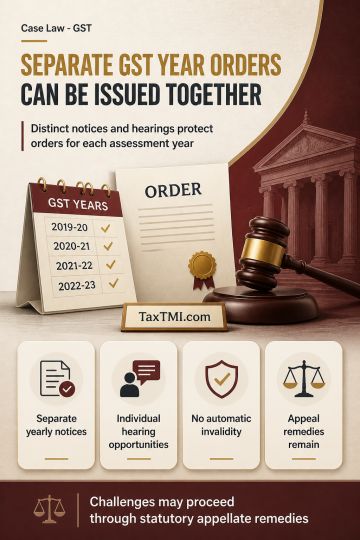
Separate assessment orders for different years remain valid when distinct notices and hearing opportunities prevent prejudice from combined proceedings
Contents
Summary
Note
Bookmark
Share
✓ Copied successfully !
Print
Print Options
For full text, please login
Login to TaxTMI
Verification Pending
The Email Id has not been verified. Click on the link we have sent on
Separate assessment orders for different assessment years may be issued simultaneously where each year is supported by a separate notice and separate opportunity to respond. The absence of a statutory prohibition means simultaneous issuance does not, by itself, invalidate the orders. The restriction on composite notices and common assessment orders is directed at preventing prejudice from combining proceedings across years, not at prohibiting coordinated issuance of distinct orders. Accordingly, simultaneous separate orders do not warrant interference, while substantive challenges remain subject to the available statutory appellate remedies.
Separate assessment orders for different assessment years may be issued simultaneously where each year is supported by a separate notice and separate opportunity to respond. The absence of a statutory prohibition means simultaneous issuance does not, by itself, invalidate the orders. The restriction on composite notices and common assessment orders is directed at preventing prejudice from combining proceedings across years, not at prohibiting coordinated issuance of distinct orders. Accordingly, simultaneous separate orders do not warrant interference, while substantive challenges remain subject to the available statutory appellate remedies.
Note: It is a system-generated summary and is for quick reference only.
 TaxTMI
  TaxTMI
 of 4910