Constitutional personal-liberty safeguards limit PMLA twin bail conditions where completed investigations lead to prolonged incarceration before trial...
Automated airline software subscriptions without human intervention fail technical-services characterisation and do not make available underlying tech...
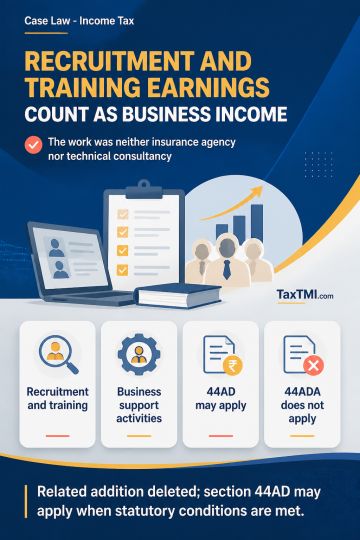
Business support recruitment and training receipts qualify for presumptive business taxation, not professional taxation under technical consultancy ru...
Treaty exemption for foreign permanent-establishment management fees prevailed, while dividend expense disallowance remained limited to an accepted al...
Centralised assessment transfers: participation after requesting centralisation can bar technical jurisdictional challenges, while assessment disputes...
Page of 4908
Press 'Enter' after typing page number.
21 to 40 of 98141 Results
❮
❯
❯❯
0 / 200
Expand Note
Add to Folder
No Folders have been created
+
Are you sure you want to delete "My most important" ?
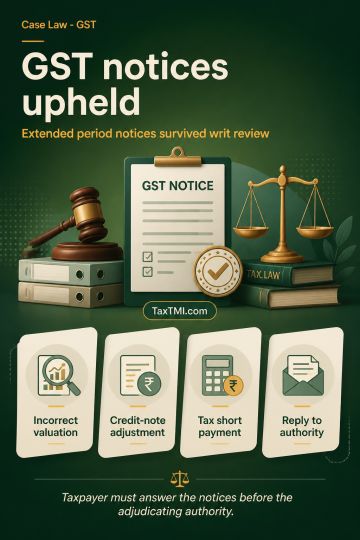
Foundational facts supported invocation of the extended period under GST Section 74, because the notices set out detailed allegations of incorrect valuation, inadmissible credit-note adjustment and short payment of tax, backed by investigation material and prior intimation; the writ challenge was therefore rejected as the disputed factual issues were not fit for writ review. Prior audit and earlier investigation did not defeat jurisdiction, because audit under Section 65 is distinct from a pan-India DGGI investigation, and overlap alone did not invalidate notices where separate grounds of evasion were alleged. The proceedings were held maintainable and the taxpayer was directed to reply before the adjudicating authority.
Foundational facts supported invocation of the extended period under GST Section 74, because the notices set out detailed allegations of incorrect valuation, inadmissible credit-note adjustment and short payment of tax, backed by investigation material and prior intimation; the writ challenge was therefore rejected as the disputed factual issues were not fit for writ review. Prior audit and earlier investigation did not defeat jurisdiction, because audit under Section 65 is distinct from a pan-India DGGI investigation, and overlap alone did not invalidate notices where separate grounds of evasion were alleged. The proceedings were held maintainable and the taxpayer was directed to reply before the adjudicating authority.
Note: It is a system-generated summary and is for quick reference only.
 TaxTMI
  TaxTMI
 of 4908