Separate business unit compliance for non-SEBI-regulated debenture trustee activities receives an extended implementation timeline amid regulatory rev...
Input Service Distributor credit rules assign eligibility, reversals and refund treatment to recipients while excluding transfer invoices from turnove...
Related-party creditor exclusion bars CoC participation where lender rights show policy-making involvement, and post-CIRP assignment cannot cure ineli...
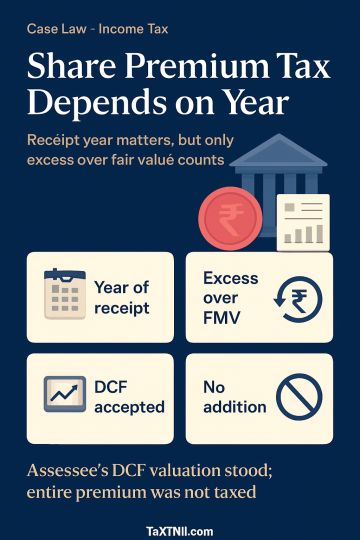
Share premium received during the relevant previous year was treated as within the scope of the anti-abuse rule even though the shares had been allotted earlier, because the trigger is receipt of consideration in excess of face value in the year of receipt. At the same time, the addition could not stand where the Assessing Officer rejected the assessee's discounted cash flow valuation without showing any defect, substituted no valid fair market value, and taxed the entire premium without proving any excess over fair market value. The Tribunal accepted the assessee's choice of valuation method and sustained no addition on that basis.
Share premium received during the relevant previous year was treated as within the scope of the anti-abuse rule even though the shares had been allotted earlier, because the trigger is receipt of consideration in excess of face value in the year of receipt. At the same time, the addition could not stand where the Assessing Officer rejected the assessee's discounted cash flow valuation without showing any defect, substituted no valid fair market value, and taxed the entire premium without proving any excess over fair market value. The Tribunal accepted the assessee's choice of valuation method and sustained no addition on that basis.
Note: It is a system-generated summary and is for quick reference only.
 TaxTMI
 TaxTMI