GST refunds for cancelled air tickets remain available when passenger reimbursements defeat unjust enrichment and credit-note adjustment is unavailabl...
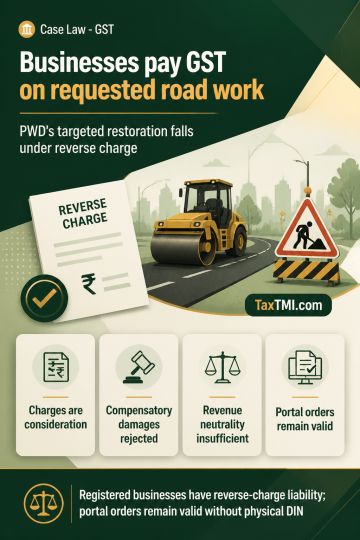
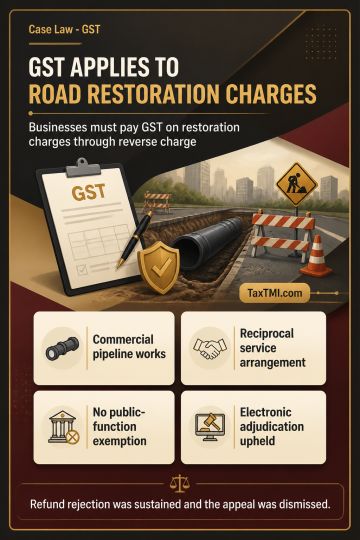
Request-driven road restoration attracts reverse-charge GST, not governmental-function treatment or compensatory-damages status for business recipient...
Road restoration charges for commercial pipeline works are taxable Government services, with reverse charge liability and no public-function exemption...
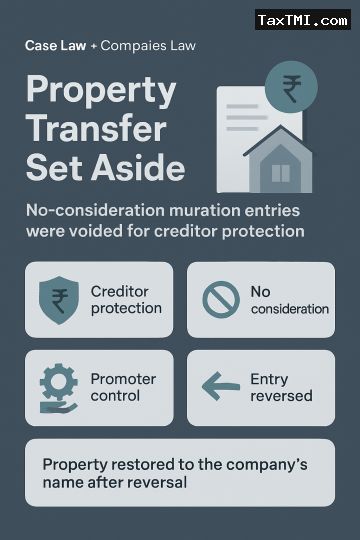
Section 531(1) protects creditors against transfers made within the statutory period as a fraudulent preference, and it can apply even where no formal conveyance is executed if title is effectively shifted through mutation entries. A company's immovable property was entered in the names of its promoters, who controlled the company, without disclosed consideration, valuation, or material supporting any quantified liability said to be owed to them. The absence of consideration and supporting records negatived good faith and showed an attempt to place the property beyond the reach of creditors. The transfer was declared void, and the mutation entries were directed to be reversed so the property stands restored in the company's name.
Section 531(1) protects creditors against transfers made within the statutory period as a fraudulent preference, and it can apply even where no formal conveyance is executed if title is effectively shifted through mutation entries. A company's immovable property was entered in the names of its promoters, who controlled the company, without disclosed consideration, valuation, or material supporting any quantified liability said to be owed to them. The absence of consideration and supporting records negatived good faith and showed an attempt to place the property beyond the reach of creditors. The transfer was declared void, and the mutation entries were directed to be reversed so the property stands restored in the company's name.
Note: It is a system-generated summary and is for quick reference only.
 TaxTMI
  TaxTMI
 of 4920